
Three faculty members in the at the University of Notre Dame have won (NEH) fellowships, extending the University of Notre Dame’s record success with the federal agency committed to supporting original research and scholarship.
, an associate professor of the practice in the ; , an associate professor of ; and , the Tracey Family Associate Professor of Philosophy, are among the 82 scholars nationwide to be awarded the competitive fellowships, which were announced Tuesday.
Since 2000, Notre Dame faculty have won more NEH fellowships than any other university in the country.
Additionally, a pair of A&L scholars — , the Rev. John A. O’Brien Associate Professor in the , and , the Keough-Hesburgh Professor of Music History and Liturgy Emerita — have won a significant, three-year NEH Humanities Initiatives at Colleges and Universities grant to develop a website and to teach medieval liturgy.
“I am delighted and proud that the NEH has again supported our faculty members’ relevant and interesting projects,” said Sarah Mustillo, the I.A. O’Shaughnessy Dean of the . “These four awards highlight the quality of diverse academic research conducted by our experts in multiple fields as well as the excellent support provided by the throughout the application process.”
A first-ever translation
Duarte will spend his fellowship editing, translating and annotating Francisco Suárez’s “Metaphysical Disputation 30” (DM 30), which is a core part of “The Metaphysical Disputations (DM),” published in Latin in 1597.
Suárez, a philosopher and theologian, composed DM to provide a grounding in metaphysics — the study of reality and existence — that’s needed to study revelation-based theology.
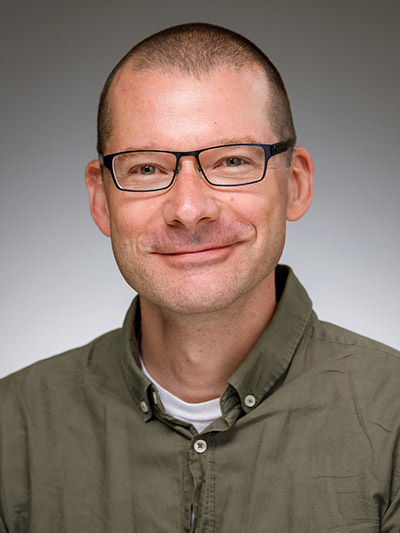
DM 30, Duarte said, is devoted to the nature of God insofar as He can be known by reason unaided by revelation. It’s interesting, in part, Duarte said, because Suárez was a professor of theology and most of his works were informed by revelation.
Duarte will be the first person to translate the treatise. The volume he plans to publish will include a substantial introduction, and in his translation, he’ll strive for a balance of readability and fidelity to the original text.
“Translation work is often treated as secondary, or of lesser value, but at the same time everyone working in the history of philosophy wishes that more texts were translated into English,” he said.
The translation could provide valuable insights to people who work on better-known philosophers such as René Descartes, Duarte said. Suárez was an important thinker whose views influenced even philosophers who saw themselves as breaking from the Aristotelian tradition of which he was a part.
While Duarte’s prior work focused on later thinkers, he became convinced that a greater familiarity with Suárez’s work would provide a better understanding of 17th-century European philosophy, as well as of life today.
“I tend to think contemporary philosophy benefits from an understanding of its own history, though not everyone in the field agrees,” he said. “For society? Well, I think intellectual traditions inform our understanding of the present, though again, not everyone agrees.”
When Duarte learned he had won an NEH fellowship, his initial reaction was disbelief.
“For someone like me,” he said, “who is neither tenured nor on the tenure track, winning an award like this is tremendously validating.”
Filling a scholarly void
Kearney, who is also a concurrent faculty member in and , will examine portrayals of American teenage girlhood from the 1930s to the 1950s in her book project, tentatively titled “Designing and Redesigning the Junior Miss: The First Wave of U.S. Teen-Girl Entertainment.”
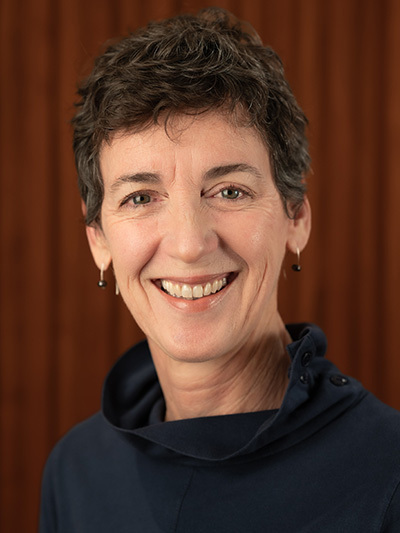
The idea for the project sparked when she was penning an entry about teen-centered shows for “The Encyclopedia of Television” and came across what may be the first short stories written about teen girls. These narratives, written by women, resist some of the stereotypes of teenage girlhood and were an important deviation from previous literature about female adolescence, Kearney said.
“Because these stories are episodic and the protagonists don’t age, they allowed girls to be girls rather than showing them becoming women,” she said.
When men subsequently adapted some of the stories for stage, film, radio and television, Kearney said, teen girl characters were altered to be more domestic and superficial in part because of prevailing identity politics, but also because of conventions and trends in performance and visual storytelling. Kearney explores both the continuities and discontinuities from those early stories, as well as in subsequent adaptations, in today’s teen girl entertainment culture.
“We can’t really make sense of what’s happening on the Disney Channel teen shows without understanding this early period,” she said. “When you focus on the past, you can begin to connect some dots.”
Part of that dot-connecting is researching representations of people of color in teen girl stories across mediums.
“Unbelievably, the first film to feature a Black teenage girl was not until 1968; the next one wasn’t until 1992,” Kearney said. “That’s how long whiteness has dominated this figure within popular American culture.”
There’s still much to be learned about the history of teen girls in entertainment. Because teen girls have long been devalued in U.S. society, Kearney said, there’s a dearth of archival material and research on the topic.
“The history of girl-centered entertainment is currently inadequate,” she wrote in her NEH proposal, “not only for understanding how the original designs of teen girlhood were produced and what they meant during that period, but also for comprehending the paradox of why the figure of the teen girl has both transformed over time and remained much the same.”
A novel interpretation of a classical theory
Ogden, whose research focuses on classical Islamic philosophy, will write the first book specifically about 11th-century Muslim philosopher Avicenna’s theory of intellect.
Avicenna, who was also a physician, theorized that there were two types of intellect — the human intellect and the active intellect. Avicenna’s theory posited that active intellect was a single, eternal intellect ultimately responsible for all human understanding and for the major metaphysical components of the Earth.
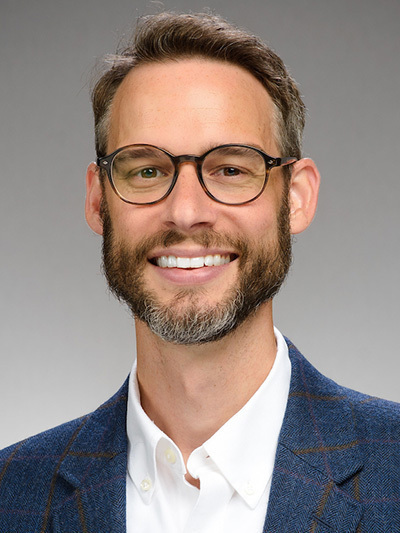
“Oftentimes when you explain it to nonexperts, they say, ‘That sounds like God,’” Ogden said. “It’s similar to God, but in Avicenna’s system, it’s a lower, semi-divine substance or intellect. It’s an intermediary between God and humanity.”
In his book — tentatively titled “Avicenna on Intellect” — Ogden will defend his novel interpretation of Avicenna’s theory as well as historically contextualize the theory with respect to Avicenna’s ancient predecessors and to later critiques.
The book will be a fitting companion piece to Ogden’s 2022 book, “Averroes on Intellect: From Aristotelian Origins to Aquinas’s Critique,” which recently won the Journal of the History of Philosophy Book Prize.
Avicenna and Averroes, Ogden said, had two of the most important theories on intellect in classical Islamic philosophy, and they heavily influenced later Islamic, Christian and Jewish philosophical traditions.
Evaluating the philosophical and historical reasons that Avicenna and others held their views continues to be important, Ogden said, because it helps modern readers consider their own preconceptions and biases.
“I think there’s something valuable — I emphasize this with my students — in reading something that’s a thousand years old, 2,000 years old, or older,” he said. “A lot of things seem perfectly natural to our minds, given where we stand in history, but if read by an outsider a thousand years from now, they might not seem that obvious. We’ve gained much more empirical data, but philosophers and neuroscientists are still debating and exploring the nature of the human mind.”
Reinvigorating an underserved field
With support from their NEH grant, Fassler and Bugyis will develop a website to preserve knowledge about the ritual practices of the medieval Roman Catholic Church and to provide instruction on how to locate, read and interpret the relevant primary sources.
The pair are liturgical historians who “see our field as underserved,” Fassler said.
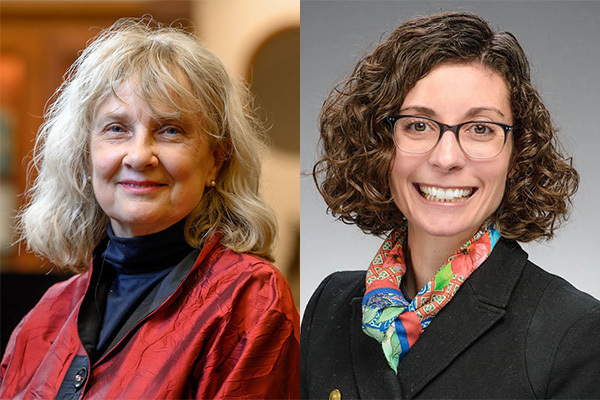
“More scholars need to know about the medieval Latin liturgy than ever before,” she said, “and the goal of the website is to offer instruction in a field that has rarely been well-served by the academy.”
Resources such as digital libraries, catalogs, databases and thousands of medieval manuscripts have now been made available online. Knowing how to use and navigate those resources, though, can be cumbersome and complicated.
“There’s all this material out there, but how do you use it?” Fassler asked. “Our whole enterprise is based on the solving of problems, and on utilizing the skills of our worldwide network of scholars to join in making tutorials.”
Bugyis and Fassler’s plan evolved into an ambitious project — “Medieval Liturgy: Tutorials for Students, Teachers, and Researchers,” initially supported with a from Notre Dame Research — that is encyclopedic in its scope and pedagogical in its goals.
Their new website, hosted by the , will feature peer-reviewed teaching videos that will systematically walk people through how to access and work with sought-after information. Fassler and Bugyis are inviting interdisciplinary liturgical scholars from Notre Dame and around the world to share their expertise, which will make their website a dynamic and evolving resource.
Main website sections will include resources on the fundamental components of medieval liturgy — the arrangement of the Church year in its annual cycle; the performance of the hours of prayer that constituted the Divine Office in every monastic church and cathedral; and the celebration of Mass. Additional units will feature other liturgical rites, women’s rites and liturgical music.
Understanding the liturgy is essential to understanding the Middle Ages, Bugyis said, but fewer and fewer graduate programs are training students in the liturgy.
“Notre Dame is one of the last places doing it. There is an abundance of resources here,” she said. “We saw a real opportunity, given the strengths that we have, to draw on the expertise of faculty and graduate students to create something new and important.”
Originally published by at on Jan. 10.