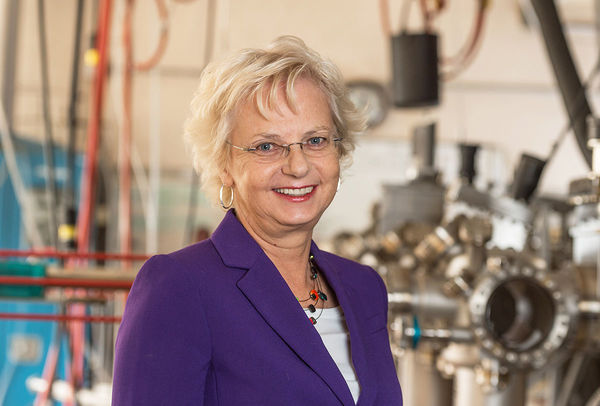
Combining her three passions for education, science, and tennis, Dobrowolska-Furdyna first had the idea of organizing the Ace for Science tennis tournaments in 2014. However, recognizing the scope of organizing such an event, Dobrowolska-Furdyna connected with the South Bend Alumni Association for help. “We had a number of meetings to discuss what it would look like. I never organized a tournament in my life, so I didn’t exactly know what I was getting myself into,” Dobrowolska-Furdyna said.
However, over the course of planning, the partnership between the Dobrowolska-Furdyna, a South Bend resident of now 30 years, and the South Bend Alumni Association flourished. “Working together with the South Bend Alumni Association was a very good thing,” Dobrowolska-Furdyna said. “I didn’t know how to do fundraising, but the Alumni Association knew. So I was taking the tennis part, and they were helping with the fundraising.”
Over the course of three years and as many Ace for Science tournaments, Dobrowolska-Furdyna helped raise about $30,000. “And then there’s the question, ‘so we raised the money, now how do we give it to the schools?’” Dobrowolska-Furdyna said. She ultimately came up with the idea to collect grant proposals from science teachers in local schools. The project concluded with an award ceremony at the South Bend Alumni Association where Dobrowolska-Furdyna awarded the science teachers who submitted winning proposals.
Dobrowolska-Furdyna feels humbled to have received the award and was pleased at how the tournaments went. “I was totally surprised. My first reaction was, ‘I haven’t done anything.’ But I definitely appreciated it and am humbled by it,” Dobrowolska-Furdyna said. “I am happy that I could do something for the city and for the schools.”
The South Bend Alumni Association will recognize Dobrowolska-Furdyna at the South Bend Community Hall of Fame Banquet on Tuesday, Nov. 14.
Originally published by at on October 12, 2017.
]]>