The three-year grant will provide funding for 15 faculty members from Notre Dame and national or international institutions to join the NDIAS as Signature Course Fellows, where they will spend a semester or summer in residence developing signature courses on topics connected to human flourishing.
“As we confront a period of unprecedented social, economic and technological change, new questions are emerging about how to build happy and meaningful lives,” said, director of the NDIAS and the Wilsey Family College Professor of Philosophy at Notre Dame. “We believe that with the right support, signature courses have a singular power to transform how we approach this urgent topic, both within the academy and in the broader public debate. Thanks to the generous support of the John Templeton Foundation, researchers will now have the opportunity to gain the time, resources and training they need to build a course that will transform their students, positively influence the public debate and accelerate their careers.”
Sullivan’s own signature course, God and the Good Life, has instructed thousands of students since its beginning in 2016 and is now a primary way for students to experience philosophy at Notre Dame. The course served as the basis of Sullivan’s recent book, “” (Penguin Books, 2022), co-authored with her fellow God and the Good Life instructor, Paul Blaschko, assistant teaching professor of philosophy and director of the Sheedy Family Program in Economy, Enterprise, and Society.
“The success of Meghan Sullivan’s God and the Good Life course at Notre Dame speaks to the deep desire for meaning among contemporary students,” said John T. McGreevy, the Charles and Jill Fischer Provost at the University of Notre Dame. “Meghan’s signature course has benefited thousands of Notre Dame undergraduates and served as a national model for innovative pedagogy. I am grateful to the Templeton Foundation for recognizing her work and providing an opportunity for Notre Dame to support faculty from across the country seeking to develop similarly transformational courses.”
The Signature Course Fellowship program includes a robust lineup of activities designed to help faculty develop, launch and maintain their courses, including a four-day opening retreat, weekly planning seminars, and training sessions led by experts on public engagement, website development and co-curricular program building.
After their residency, fellows will launch their course at their home institution and commit to teaching it for at least three semesters. Fellows will convene at the conclusion of the grant for a summative conference, providing them the opportunity to demonstrate course content and share lessons learned.
Semester-long fellows will receive a $50,000 stipend during their semester of residency, and summer-based fellows will receive a $15,000 stipend during their four weeks of residency. All fellows will be given subsidized housing, design funds to help build their courses, a sub-grant to their home university to facilitate the course launch and support from student research assistants.
The grant will also support the hiring of two new NDIAS staff members to help administer the program.
In joining the NDIAS, Signature Course Fellows will become part of an institute that has long sought to make interdisciplinary research on questions related to value, meaning and purpose accessible to broad audiences. Founded in 2008, the NDIAS convenes an interdisciplinary group of faculty fellows, graduate students and undergraduate scholars each year to study questions that engage complex ethical challenges of our time and affect our ability to lead valuable, meaningful lives.
The NDIAS selected “” as its organizing research theme for the 2024-25 academic year. The Signature Course Fellows will be integrated into the institute’s broader cohort of Good Life faculty, doctoral and undergraduate fellows and the programming it is developing to support them, such as research seminars, guest lectures, film screenings and community events.
Signature Course Fellowships are open to distinguished or high-potential tenure-stream scholars of any discipline who are developing a signature course on a topic connected to human flourishing. To learn more about the Signature Course Fellowship program, including how to apply, visit .
]]>
How will we reimagine the public sphere when we reassemble after a long period of social isolation? How will we understand public and private in a world where new technologies continue to blur the distinction? How do we conceive of the public in a world increasingly fractured by race, classand political affiliation?
Questions like these will guide the (NDIAS) during the 2022-23 academic year when the institute embarks on a year-long research project investigating the theme“The Public.”
The project aims to bring together 10-15 faculty from across the disciplines — including the humanities, natural sciences, social sciences, legal studiesand the arts — for a year of collaboration and accelerated research on the theme.
“Here at the NDIAS, we know that excellent research and intentional collaboration can help us better understand the world around us and imagine options for our common future,” said , director of the NDIAS and the Wilsey Family College Professor of Philosophy. “We are thrilled to start recruitment for the 2022-2023 Public project, which was conceived with input from faculty across the University, reflecting a deep interest in these research questions. We are eager to start the process of assembling our team of top scholars from around the globe, Notre Dame Ph.D. fellows, undergraduatesand campus and community partners.”
Faculty fellows live and work at the University of Notre Dame and pursue their research in the NDIAS’interdisciplinary research community. In addition to a fellowship stipend, fellows receive subsidized housing, a research allowance of up to $500 per semesterand a private office at the NDIAS.
Throughout the year, the NDIAS will organize robust programming to further explore the theme and cultivate collaboration, such as work-in-progress seminars, guest lectures, book clubs, film viewingsand social events.
The faculty fellows will be joined by a cohort of graduate and undergraduate researchers from Notre Dame who are pursuing their own public-related research projects. The graduate and undergraduate students will collaborate with the faculty fellows, with the undergraduates serving as research assistants as the need arises.
Faculty fellows typically have a faculty appointment at their home institution, but the fellowships are also open to independent researchers, public practitioners, postdoctoral scholarsand those who have recently received their doctorate(or equivalent terminal) degree. Scholars from outside the U.S., researchers at national laboratories, fellows from other centers and institutesandfaculty from Notre Dameare invited to apply.
Each applicant will be required to submit a research proposal that addresses the designated 2022-23 research theme. A representative list of research questions related to The Public can be found at .
The application period for faculty fellowships on The Public is now open and will continue until 11:59 p.m. Sept. 27.
To learn more about the Faculty Fellowship Program at the NDIAS, visit .
The NDIAS convenes an interdisciplinary group of faculty fellows, top doctoral candidatesand undergraduate scholars to study questions that require a joint focus, benefit from sustained research and discussionand advance our understanding of core issues that affect our ability to lead valuable, meaningful lives. To learn more, visit .
Contact:Kristian Olsen, fellowships program manager, Notre Dame Institute for Advanced Study,,574-631-2830;
Originally published by at on May 6.
]]>“These nine doctoral candidates reflect the extraordinary talent and diversity of graduate researchers at Notre Dame,” said , director of the NDIAS and the Wilsey Family College Professor of Philosophy. “We anticipate ambitious, mutually strengthening work from this team in the coming school year, and we are so grateful for the opportunity to welcome them into the busy life of the institute. They each bring provocative research ideas, proven records of accomplishmentand a vision to help us all understand and build more resilient systems.”
Each of the graduate fellows is conducting a substantial research project related to , the NDIAS’organizing research theme for the 2021-22 school year. Two of the fellows are co-sponsored by the (ND-TEC) and are pursuing research projects that engage with questions related to the ethical use of technology.
“ND-TEC is thrilled to collaborate, once again, with the NDIAS to support early career researchers with expertise in technology ethics,” said , director of ND-TEC and the John P. Murphy Foundation Professor of Law. “It has always been our goal at ND-TEC to help train the next generation of critical thinkers about technology, and this is a terrific opportunity to do that. We’re very excited to co-sponsor two graduate fellows next year and look forward to their contributions to ND-TEC.”
The 2021-22 distinguished graduate fellows are:
Graduate fellows receive $30,000 stipends along with $1,000 of research support.
Throughout the year, the graduate fellows will work alongside the NDIAS’ and participate in the institute’s yearly academic programming, including its annual presentation and writing retreats, weekly research seminars, conferencesand public outreach events. Graduate fellows also have the opportunity to engage in research and career mentorships with institute faculty, staffand campus partners.
The Distinguished Graduate Fellowship Program is made possible with support from Michael Wilsey (’65), who helped fund the pilot program for doctorate students in the College of Arts and Letters. The graduate fellow from the College of Science is supported by Associate Professor Jason McLachlan, who also joins the institute as a 2021-22 faculty fellow.
More information about the fellowship class can be found at .
The NDIAS convenes an interdisciplinary group of faculty fellows, top doctoral candidatesand undergraduate scholars to study questions that require a joint focus, benefit from sustained research and discussionand advance our understanding of core issues that affect our ability to lead valuable, meaningful lives. To learn more, visit .
Contact: Maria Di Pasquale, associate director, Notre Dame Institute for Advanced Study,mdipasqu@nd.edu,574-631-3770;
Originally published by at on April 29.
]]>Organized by the Francisco de Vitoria University (Madrid) and the Joseph Ratzinger/Benedict XVI Vatican Foundation, the Expanded Reason Awards aim to recognize academic achievements that advance Pope Benedict’s proposal to widen the horizon of reason.
“In the context of a positivist and relativist culture, Joseph Ratzinger and later Benedict XVI points out the deep division of knowledge and the excessive specialization of the university field that leave out an overall vision that gives meaning to each specific science,” says FatherFederico Lombardi, president of the Ratzinger/Benedict XVI Vatican Foundation and a jury member for the prize. In opposition to this prevailing culture, the Expanded Reason Awards “seek to promote a transdisciplinary dialogue that not only appreciates the interdisciplinarity of the sciences, but also affirms the relevance of broader philosophical and theological concerns.”
The awards are distributed in both teaching and research categories, with Brad Gregory receiving honorable mention for his research. , Notre Dame Professor of and Director of the , led a team of four colleagues from Notre Dame that won one of the awards in the teaching category.

The prize-giving ceremony took place on Sept. 24 in the Casina Pio IV, home of the Pontifical Academy of Sciences, in the Vatican Gardens. The celebration occurred in conjunction with an international symposium focused on the possibility for dialogue among science, philosophyand theology in university communities today. Winners of the Expanded Reason Awards were invited participants during the conference and had the opportunity to meet Pope Francis after the weekly papal audienceon Sept. 26.
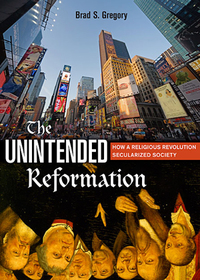
“It is a great honor to have my book, 'The Unintended Reformation,' recognized in this way by the Expanded Reason Awards,” Gregory said. “The awards, like NDIAS and Notre Dame as a Catholic research university more broadly, encourage an integral understanding of all knowledge within a vision of reason and academic freedom that is not constrained by metaphysical naturalism.”
Contact: Kristian Olsen,Notre Dame Institute for Advanced Study,574-631-2830,kolsen1@nd.edu;
Originally published by at on Oct. 8.
]]>Schlöndorff will open the conference at 7:30 p.m. Thursday (April 26) in the Hesburgh Center Auditorium with his lecture, “1968: A Long Time Coming.” Schlöndorff will also introduce a screening of his film, “Young Törless,” at 7 p.m. Friday (April 27) in the DeBartolo Performing Arts Center. Walker will close the festival at 7:30 p.m. Saturday (April 28) in the Hesburgh Center Auditorium with his lecture, “1968: Reform or Revolution.”
Both lectures are free and open to all. Tickets to the film are available for free at the Nanovic Institute (1060 NanovicHall) and at the ticket office, 574-631-2800.
Schlöndorff is a film director, screen writerand producer from Germany who has worked on more than 30 feature-length movies, documentariesand short films.He is known for bringing German literary works to the screen and for making “unfilmable” subjects accessible to wider audiences.His film “The Tin Drum”won the highest prize at the 1979 Cannes Film Festival — the Palme d’Or — and then won Best Foreign Language Film at the 1980 Academy Awards. “Young Törless,”his debut feature film, was released in 1966. In the film, Törless and his friends mercilessly bully another student at their boarding school in pre-war Austria-Hungary. The film is a thought-provoking reflection on power dynamics, following orders, the depth of human crueltyand the possibility for redemption.
“We are thrilled that Volker Schlöndorff will be taking part in our 1968 conference,” says Anthony Monta, associate director ofthe Nanovic Institute. “He and a small number of other filmmakers were responsible for a new era of German cinema and took part in broader cultural trends in Europe whose significance, in retrospect, are difficult to overstate."
Walker is a prominent politician from the Republic of Chile who has served as senator, foreign ministerand president of the Christian Democratic Party. In addition to being an influential politician, Walker is a respected scholar and public intellectual. He is the author of several academic books, including “Democracy in Latin America: Between Hope and Despair,” published in 2013by the University of Notre Dame Press as part of the Kellogg Institute’s book series on democracy and development. He will serve as the Hewlett Fellow for Public Policy at the Kellogg Institute beginning in the fall of 2018.
“Over the last 40 years, Ignacio has been involved in the political fate of democracy in the Americas in each of its stages — through coups and dictatorships to the region’s transition to democracy, and now working through the challenge of social inclusion in the consolidation of democracy. Very few people can bring this perspective to Notre Dame. He is so deeply realistic, without being ideological," says Paolo Carozza, director of the Kellogg Institute.
“Ignacio Walker is one of the most thoughtful political leaders and public intellectuals in Latin America today,” adds Steve Reifenberg, executive director of the Kellogg Institute. "It is an honor to have him on campus, participating in the 1968 conference.”
The year 1968 was a pivotal one in the history of Europe and Latin America. In each, the year was one of tremendous political unrest, from the Parisian labor strikes, to the beginning of the Prague Spring in Czechoslovakia, to the Tlatelolcomassacre in Mexico.At the same time, the year was one of stunning artistic achievement, from the showing of the Beatles’ “Yellow Submarine” in the U.K., to the formation of the Plastic People of the Universe underground rock band in Prague, to the opening the New National Gallery of modern art in Berlin. The “1968 in Europe and Latin America” series celebrates and reflects on the transformative events of that remarkable year.
Schlöndorff’s and Walker’s public lectures will bookend a series of 1968-related events at the conference, including a series of paper workshops where an interdisciplinary group of invited scholars will present and receive feedback on work that addresses themes from 1968. The guiding question of these workshops will be whether the events in 1968 on both sides of the globe can be considered a cultural revolution. Following the conference, the papers that result from the workshops will be prepared for publication as a book collection.
“I commend Jim McAdams and the Nanovic Institute for assembling such an impressive and diverse group of scholars from around the globe to examine the tumultuous events of 1968 in Europe and Latin America,” says Stephen Wrinn, director of the University of Notre Dame Press. “I expect that the conference will require scholars from all disciplines to reassess their understanding of this profound turning point in world history.”
The conference is organized by, William M. Scholl Professor of International Affairs and Director of the Nanovic Institute; , Rev. John J. Cavanaugh, C.S.C., Professor of the Humanities; , professor of conducting; and , associate professor of history.
For more information about the conference and Schlöndorff’s and Walker’s lectures, visit .
The Nanovic Institute for European 91Ƶ at the University of Notre Dame is committed to enriching the intellectual culture of Notre Dame by creating an integrated, interdisciplinary home for students and faculty to explore the evolving ideas, cultures, beliefs and institutions that shape Europe today. The institute is an integral part of Notre Dame’s .
Originally published by at on April 23.
]]>The Laura Shannon Prize, one of the preeminent prizes for European studies, is awarded each year to the best book in European studies that transcends a focus on any one country, state or people to stimulate new ways of thinking about contemporary Europe as a whole. This year’s cycle of the award considered books in humanities published in 2015 or 2016.
“The Work of the Dead,” which examines the ways the dead have been treated in western Europe since the 18th century, was praised highly by the final jury:

The dead matter to us; they always have. But, as Thomas W. Laqueur demonstrates in“The Work of the Dead,” why and how the dead matter has changed over time. Subtitled“A Cultural History of Mortal Remains,” this fascinating book transcends a focus on any one country, state, people, or historical moment to consider how and why the living have cared for the dead from antiquity through the twentieth century. In clear and graceful prose, Laqueur examines his subject matter through lenses that are at times anthropological, historical, and philosophical in nature. The depth and breadth of his scholarship are particularly noteworthy.A monumental achievement,“The Work of the Dead”contains a vast reservoir of historical information and insights regarding cultural practices surrounding the treatment of the dead that scholars from many disciplines will draw upon for years to come.
, who is Helen Fawcett Professor of History at the University of California Berkeley, also does research in British social history, medical history and the history of sexuality, and he has written numerous books and articles on these topics. He will visit Notre Dame during the fall semester of 2018 to accept the prize, deliver a public lecture and meet with students and faculty.
The Shannon Prize jury also awarded honorable mention to Richard Bourke for his book“Empire & Revolution: The Political Life of Edmund Burke,” published by.is professor in the history of political thought at Queen MaryUniversity of London. The jury commended his book, stating:
Richard Bourke’s“Empire & Revolution: The Political Life of Edmund Burke”is a significant and carefully researched study of a towering figure in eighteenth-century European history and politics: Edmund Burke, the great rhetorician, politician, and political theorist. While some have dismissed Burke as irredeemably conservative, Bourke has recovered the political reformer, the opponent of colonial exploitation and royal overreach, and the unstinting advocate for oppressed peoples. To the image of Burke as a supporter of class distinctions, an “open aristocracy,” and a parliamentary monarchy, Bourke brings a great deal of nuance. One of the great achievements of this book is the author’s attention to Burke’s remarkable style and rhetoric — treating them not merely as secondary matters, but as integral components of his message. Well-grounded in the sources, clear in its methodological approach, and elegantly written, “Empire & Revolution”richly repays the effort of those willing to engage a study of this detail and density. It is a paragon of intellectual history.
The jury for this year’s prize consisted of a distinguished group of scholars. Members of the final jury included:, Barbara E. & Richard J. Franke Distinguished Service Professor and Director of the Franke Institute for the Humanities, University of Chicago;, John J. Cavanaugh, C.S.C., Professor of the Humanities, University of Notre Dame;, professor of architecture and design and associate dean of research, scholarship, and creative work in the 91Ƶ of Architecture;, John D. Boyd, S.J., Chair in the Poetic Imagination, Fordham University; and, professor of humanities, Columbia University.
Now in its ninth year, the Laura Shannon Prize is made possible through a generous endowment from Michael and Laura Shannon of Houston, Texas. Laura serves on the Nanovic Institute’s Advisory Board and Michael, who graduated from Notre Dame in 1958, serves on Notre Dame’sGraduate 91Ƶ and Research Advisory Council.
The Nanovic Institute for European 91Ƶ at the University of Notre Dame is committed to enriching the intellectual culture of Notre Dame by creating an integrated, interdisciplinary home for students and faculty to explore the evolving ideas, cultures, beliefs and institutions that shape Europe today. The institute is an integral part of Notre Dame’s. For additional information about the Nanovic Institute and the Laura Shannon Prize, visit.
For questions about the prize, contactLauraShannonPrize@nd.edu.
]]>
Tom Gresik, Faculty Fellow at the Nanovic Institute and Professor in the Notre Dame Economics Department, recently published a paper on income shifting in theJournal of Public Economicsand was appointed to the Academic Advisory Board at the Norwegian Center for Taxation.
In a recent interview, Dr. Gresik discusses these accomplishments, along with other European economic issues. For more on the interview, visit the.
Originally published by at on November 02, 2017.
]]>
Tom Gresik, Faculty Fellow at the Nanovic Institute and Professor in the Notre Dame Economics Department, recently published a paper on income shifting in the Journal of Public Economics and was appointed to the Academic Advisory Board at the Norwegian Center for Taxation.
In a recent interview, Dr. Gresik discusses these accomplishments, along with other European economic issues.
My current research focuses on the strategies multinational firms use to move money and assets among the countries in which they operate, with the goal of lowering the corporate income taxes they pay, and on the policies governments adopt either to encourage or discourage this behavior.
A common focus of all my research has been on understanding the role of asymmetric information on the behavior of firms, markets, and governments. Early in my career I became interested in multinational behavior and regulation because multinational firms have better information than governments about investment opportunities and costs in each country. The ways in which firms exploit this advantage and the ways governments try to respond are fascinating and were not well understood when I first started working on this topic in the early 1990s.
I continue to be fascinated by this topic in large part because moderate amounts of tax avoidance behavior actually helps increase investment, employment, and wages in many countries. So what looks like socially harmful behavior can have positive benefits for both developed and developing countries. Understanding the distinction between socially productive and unproductive behavior by both firms and governments is critical as the world we live in becomes increasingly globalized.
Income shifting refers to the practice by multinational firms of moving income out of high-tax countries and into low-tax countries before it is taxed. One income shifting practice is to use debt instead of equity to finance operations in a country. Suppose a U.S. firm wants to build and operate a factory in Germany. Rather than investing in the German company through a stock investment, the U.S. firm can first send its investment to an office in a tax haven country, such as Bermuda, and have the Bermuda office lend the money to the German company. Interest payments on the debt reduce the German company’s taxable income. Since the German company can pay a tax rate of as much as 33% while the corporate tax rate in Bermuda is essentially zero, every dollar of interest payments reduces the American firm’s global taxes by 33 cents. On the positive side, the ability to fund investments in Germany with debt lowers the cost of investing in Germany. This encourages more foreign business investment into Germany, which in turn creates more jobs and increases wages for German workers. On the negative side, Germany can collect fewer tax revenues. It turns out that a small amount of debt financing is good for the German economy, while a large amount can be harmful.
A dark side to debt financing, to the extent it channels the investment through tax havens, is that tax havens are not only countries with low tax rates but also strong secrecy laws. The secrecy laws make it easier for money from criminal activities such as drug trafficking, weapons trade, and human trafficking to be hidden and often times invested in sound banks. Interestingly, one of the tax haven jurisdictions with the strongest secrecy laws is Delaware because one does not need to provide any proof of identity to set up a personal corporation.
A figure from Dr. Gresik’s paper illustrates the percentage of increase in national income that is expected to result when a country switches from a safe harbor rule to an earnings stripping rule. The figure illustrates that the more income shifting the earnings stripping rule allows for, the greater the increase in national income.
Because countries recognize that too much debt financing can be harmful to their economies, a number of them have enacted what are called “thin capitalization” rules. These rules limit the amount of debt financing from which a company can get tax savings. One type of thin capitalization rule is called a safe harbor rule and the other type is called an earnings stripping rule. Safe harbor rules simply place a limit on the amount of debt a firm can have while earnings stripping rules place a limit on the amount of interest payments a firm can make and still receive a tax deduction. So the actual rules are not as sinister as their names suggest.
A few countries, such as the United States, France, and Denmark, use combinations of the two rules. Several years ago a ruling by the European Court of Justice prompted a number of European countries to switch from using a safe harbor rule to using an earnings stripping rule. The contribution of the paper I recently published with two Norwegian colleagues shows that an earnings stripping rule encourages more foreign business investment and fewer tax revenue losses than a safe harbor rule or a combined rule, hence the suggestive wording in the title of the paper.
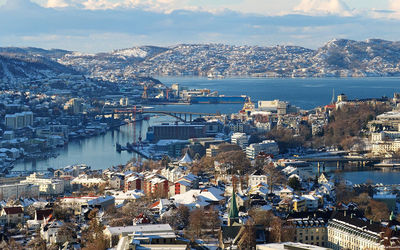
Bergen, Norway, where the Norwegian Center for Taxation is located.
Five years ago, the Norwegian Ministry of Finance provided funding that created the Norwegian Center for Taxation at the Norwegian 91Ƶ of Economics and Business in Bergen. With the tremendous growth and sophistication of global businesses, the government recognized that it needed to train more people who understood both the positive and negative aspects of multinational firms and it needed to support more multi-disciplinary research on multinational behavior and policy design. (I had the honor of giving the keynote address at the inaugural ceremonies for the Center.) Among the activities of the Center are that it provides funding for faculty positions in public economics (the broad term used to reference research in taxation and government spending policies) and law and accounting, it supports post-docs and graduate students, and it sponsors conferences. It has been so successful in all its efforts that the funding from the Ministry of Finance was just renewed for another five years.
A few years ago with funding from Notre Dame International (NDI), ND co-sponsored a multi-disciplinary conference in London on multinational behavior with the Norwegian Center and a Max Planck Institute in Munich. Participants at the London conference included economists, legal scholars, accounting scholars, representatives from Her Majesty’s Treasury, a distinguished British tax lawyer, and the head of tax planning for a major multinational firm. In November, the three groups will hold a second conference in Bergen, this time with key support from the Nanovic Institute as well as NDI and the Kellogg Institute. The first conference led to a number of published papers, including the one mentioned above. It is our hope that the second conference will be as successful.
One of the goals of the Norwegian Center for Taxation for the next five years is to increase its international exposure. To help the Center achieve this goal, it established an Academic Advisory Board. The responsibilities of the members of this board are to advise the Director on how to increase the Center’s visibility and to guide some of the Center’s research initiatives. One of the Board’s strategies is to expand the Center’s connections with major government bodies such as the Organisation for Economic Co-operation and Development (OECD) and the practitioner community.
Your list represents the top high-profile European economic issues. Key to addressing these issues across Europe will be economic policies that grow the private sector in each country by attracting new business investment and lead to both job and wage growth. When tax rates are high, large international businesses can employ income shifting strategies to minimize their tax bills. This means that smaller, often domestic, businesses bear a disproportionate share of the tax burden. This disparate tax treatment not only puts stress on a country’s fiscal health, it also creates many of the nationalistic political tensions that are becoming more prominent across the world. The OECD is trying to address the income shifting challenges through its Base Erosion and Profit Shifting (BEPS) initiatives. Even though the United States is an OECD member, the impact of BEPS does not get much attention here. The other news we tend not to hear about are policies that undermine BEPS, such as last week’s decision by The Netherlands to eliminate taxes on dividend income. It is a sign that the European members of the OECD are not on the same page. We also do not hear much debate about the large public sectors in many European countries that can make it harder for those countries to grow its private sector.
Originally published by at on October 23, 2017.
]]>