tag:news.nd.edu,2005:/news/authors/krocndedu tag:news.nd.edu,2005:/latest Notre Dame News | Notre Dame News | News 2019-11-07T09:00:00-05:00 Notre Dame News gathers and disseminates information that enhances understanding of the University’s academic and research mission and its accomplishments as a Catholic institute of higher learning. tag:news.nd.edu,2005:News/105473 2019-11-07T09:00:00-05:00 2019-11-07T09:16:59-05:00 Kroc Institute to host Building Sustainable Peace conference More than 450 attendees from 37 different countries will travel to the University of Notre Dame campus to participate in the Building Sustainable Peace conference hosted by the , taking place Thursday through Sunday (Nov. 7-10).

The conference, which grows out of the institute’s recently launched five-year strategic plan, will explore the state of the field of peace research and practice, and the nexus between them. Keynote addresses, film screenings and panel discussions throughout the weekend are designed to animate conversations about the synergies and the contestations between theory and practice, the field and the classroom, and the different local, national, regional and global orientations toward peace.

“We live at a time where challenges to peace and justice are mounting around the world,” says , the John M. Regan Jr. Director of the Kroc Institute. “In the past decade, violence, in all of its forms, has significantly increased globally. Our hope is that this conference will support the scholarship and work of peace studies scholars and practitioners as they work to alleviate suffering and violence around the world.”

The conference will feature 290 presenters participating in over 65 sessions, each focused on a different topic or current event within the multidisciplinary field of peace studies. Topics include climate change and environmental violence; restorative justice practices; peacemaking in active conflict zones; new technology, violence and peace; gender and peacebuilding; peace agreement monitoring in Colombia; and more.

Keynote speakers for the conference include:

  • Séverine Autesserre, professor of political science at Barnard College, Columbia University.
  • Sergio Jaramillo Caro, Colombia’s former high commissioner of peace and Colombian ambassador to Belgium.
  • sujatha baliga, director of the Restorative Justice Project and Just Beginnings Collaborative Fellow at Impact Justice.
  • , professor emeritus of international peacebuilding at the Kroc Institute and senior fellow at Humanity United.

In addition, a panel of experts including Gearoid Millar of the University of Aberdeen, Elias Omondi Opongo of the Hekima Institute of Peace 91Ƶ and International Relations, and Lisa Schirch of the Toda Peace Institute, will participate in a conversation on the state of the field of peace studies from 12:30 to 1:30 p.m. Friday (Nov. 8). of Notre Dame’s will serve as the panel moderator.

All plenary sessions will be livestreamed on the .

You can also follow the conference on social media by using #KrocConf19.

All times listed above are Eastern Standard Time (GMT-5).

About the Kroc Institute: The University of Notre Dame’s Kroc Institute for International Peace 91Ƶ, part of the Keough 91Ƶ of Global Affairs, is one of the world’s leading centers for the study of the causes of violent conflict and strategies for sustainable peace.

Contact: Hannah Heinzekehr, Kroc Institute, hheinzek@nd.edu, 574-631-1808

Originally published by kroc.nd.edu at on November 05, 2019.

]]>
kroc.nd.edu
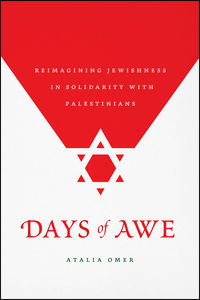
tag:news.nd.edu,2005:News/102949 2019-08-22T11:00:00-04:00 2019-08-23T12:34:16-04:00 New book explores development of Jewish solidarity with Palestinians In her recently published book, (University of Chicago Press, 2019), traces the development of American Jewish solidarity with Palestinians and the diverse social movements that have shaped this advocacy. She also explores the implications of this developing solidarity for Jewish tradition and identity now and into the future.

Omer, associate professor of religion, conflict and peace studies at the University of Notre Dame’s , part of the , began research for this book in 2013. She found Chicago to be an “epicenter of Jewish community organizing and justice work” and a space to ground her research, although she conducted interviews with Jews from across the U.S., both in person and online. She also interviewed non-Jewish Palestinian solidarity activists from in and beyond the U.S.

To frame the book, Omer chose a title referencing Jewish High Holy Days. The 10 days starting with Rosh Hashanah are commonly known as the Days of Awe, and are meant as a liminal space and time of introspection on sin, both individual and collective, prior to repentance on Yom Kippur.

“The title intends to capture a sense of grappling with sin and uncertainty undertaken by the activists I interviewed,” said Omer. “For many Jewish individuals, the Daysof Awe are about disrupting the binaries that form and shape their lives and taking responsibility for their role in creating them.”

Days Of Awe

Omer focused particularly on American Jews because of the intertwined foreign policy relationship between the U.S. and Israel. In the book, she explores the interconnections between anti-Semitism and other forms of oppression, and seeks to add complexity to the argument that social movements that critique the Israeli occupation of the West Bank are inherently anti-Semitic.

“In the U.S. we are very clearly facing rising anti-Semitism, but we are also seeing a growing realization of the interconnections between struggles for justice,” said Omer. “For instance, although we should not equate them, there are similarities at the core of our resistance to anti-blackness, Islamophobia and anti-Semitism.”

Omer suggests that as American Jews participate in other activism — including anti-military, anti-racist and anti-classist movements — it has become easier to understand the Palestinian struggle as part of these intersectional social movements for justice. This awakening is also leading many American Jews to reevaluate Zionist discourse and, with it, their Jewish identity.

“Many American Jews are in a process of unlearning Zionist narratives that they were incubated in,” Omer said. “They are grappling with the occupation and how it reflects on them, because it’s done in their name. They can’t stop being Jewish, so they must refigure what it means to be Jewish if they choose to protest the Israeli occupation.”

Omer hopes this book will be helpful not only to readers interested in Israel-Palestine, but also to peace studies and religious studies scholars more broadly as an encouragement to prioritize research and practice on physical violence as well as violence embedded in knowledge and belief systems.

“If you move from a narrow definition of violence as only direct violence and engage with structural, cultural, discursive and epistemic violence, then the analytic space can be expanded and can still include implications for policy,” said Omer. “For peace studies scholars, it will be important to ask to what degree traditional peace studies research has reinforced global structural violence.”

Omer also wrote the book with the goal of emphasizing the importance of how stories and narratives are told and by whom, and how those narratives can shape individuals and movements.

“I’m arguing that we must take stories very seriously in peace studies,” Omer said. “This book explores one strong example of how orientalism, Islamophobia, and the particular ways of remembering and drawing lessons from the Holocaust genocide have all also been a part of inflicting and legitimizing further violence. If we miss studying that narrative and discursive space, our analysis is diminished.”

“Days of Awe” was published in May by the University of Chicago Press. The Kroc Institute will host a book launch and reception at 4:00 p.m. on Tuesday, September 10 at the Hesburgh Center for International 91Ƶ. Shaul Magid, distinguished fellow in Jewish studies at Dartmouth College, will offer commentary during the event.

Contact: Atalia Omer, Atalia.Omer.3@nd.edu

Originally published by kroc.nd.edu at on August 22, 2019.

]]>
kroc.nd.edu
tag:news.nd.edu,2005:News/101967 2019-07-16T11:30:00-04:00 2019-07-16T11:36:21-04:00 Kroc Institute doctoral program introduces peace studies graduate minor The doctoral program at the University of Notre Dame's is expanding to include a new . Beginning fall 2019, graduate students pursuing a terminal master’s or doctoral degree at the Universitywill have the opportunity to complete a minor concentration in peace studies.

The graduate minor will give students access to classes taught by core faculty members at the Kroc Institute, part of the ,and provide opportunities for students to engage with the Kroc Institute’s diverse learning community. For doctoral students, combining concentrated coursework in peace studies with their primary discipline can also enhance their scholarship and professional options.

“Over the last decade, peace studies has influenced scholars and students in diverse departments across the College of Arts and Letters through the joint Ph.D. program, but we always believed we were merely scratching the surface of the scholarly and practical interest in peace and conflict that exists in the Notre Dame community,” said , director of doctoral studies and associate professor of anthropology and peace studies at the Kroc Institute. “The new graduate minor allows students from around the University to enhance their work with rigorous training in peace studies, and we are looking forward to seeing the depth of that interest. We believe peace studies has limitless practicaland scholarly applications, and we are excited about collaborating with students across campus.”

Students pursuing the will be required to complete three peace studies courses (a total of nine credit hours), and participate in two semesters of the Kroc Institute’s Peace Research Education Seminars.

Begun in 2008, the equips students who are fully trained, professionalizedand marketable in one of six traditional disciplines in the humanities and social sciences (anthropology, history, political science, psychology, sociologyor theology) and the multidisciplinary field of peace studies.

Since its inception, the program has graduated 26 students. Many graduates have gone on to secure , as well as research fellowships and prestigious placements at international peacebuilding organizations.

Contact: Kevin Vaughn, assistant director for doctoral studies, krocphd@nd.edu

Originally published by kroc.nd.edu at on July 15.

]]>
kroc.nd.edu
tag:news.nd.edu,2005:News/96827 2019-02-19T11:00:00-05:00 2019-02-19T11:08:19-05:00 Kroc Professor Emeritus John Paul Lederach to receive 2019 Niwano Peace Prize has been selected as the recipient of the 36th . Lederach is professor emeritus of international peacebuilding at the University of Notre Dame’s and a senior fellow at . The annual award, presented by the Japan-based Niwano Peace Foundation, honors those devoted to interreligious cooperation in service of world peace.

Lederach was chosen by the Niwano Peace Prize Committee through an annual process that involves soliciting hundreds of nominations from individuals around the world. In its statement announcing Lederach’s award, the selection committee emphasized his role in the development and teaching of peace theory and strategy, as well as his on-the-ground peacebuilding work around the world, including in Colombia, Nepal, Northern Ireland and the Philippines.

“What we hear today is not good news with extremism, organized violenceand authoritarian regimes who are not honoring the rule of law. With this ongoing situation, urgent and important work includes influencing and cultivating a culture of peace among these societies and communities,” said committee member Harsha Kumara Navaratne. “Dr. John Paul [Lederach]’s contribution to conflict transformation through his teaching, training, practicingand his own organizational network has given tremendous inspiration and courage to peace activists and practitioners around the world.”

Lederach will travel to Tokyo, Japan, to receive the award on May 8 and to give a speech during a formal ceremony attended by select global peace leaders and Japanese dignitaries. As part of the award, Lederach will receive a certificate, a gold medal and 20 million yen (roughly $180,000).

“I am grateful and humbled to receive the 36th Niwano Peace Prize,” wrote Lederach in his acceptance letter. “Your recognition gives me courage that our global beloved family can move beyond hate, divisionand exclusion and create the bonds that truly heal.”

Lederach joined the Kroc Institute faculty in 1999. He is widely known for his pioneering work in conflict transformation, and has helped to design and conduct training programs in 25 countries across five continents. He was instrumental in curriculum design for Kroc’s Master’s in International Peace 91Ƶ (now part of the ).

“John Paul embodies the model of the scholar-practitioner that we emphasize here,” said Asher Kaufman, John M. ReganJr.Director of the Kroc Institute. “Most importantly, his concept of strategic peacebuilding has become the organizing principle for all of our educational programs and activities here at Kroc.”

Lederach also facilitated the development of strong relationships between the Kroc Institute and peacebuilders in Colombia and to promote nonviolent conflict transformation throughout the country. These efforts were documented in a as part of Notre Dame’s “What Would You Fight For?” video series. In August 2013, Lederach was appointed director of Kroc’s Peace Accords Matrix project, which would later be tasked with monitoring the implementation of Colombia’s 2016 peace accord under the direction of .

Lederach is the author of 22 books, including "" (Oxford University Press, 2005) and "" (USIP, 1997). He is also a Distinguished Scholar at the Center for Justice and Peacebuilding, part of Eastern Mennonite University in Harrisonburg, Virginia.

The Niwano Peace Foundation established the Niwano Peace Prize in 1983 “to honor and encourage individuals and organizations that have contributed significantly to interreligious cooperation, thereby furthering the cause of world peace, and to make their achievements known as widely as possible.” The prize is named in honor of Nikkyo Niwano, the founder and first president of the Buddhist organization Rissho Kosei-kai.

Past recipients of the prize include the Adyan Foundation in Lebanon (2018), His Royal Highness Prince El Hassan bin Talal of Jordan (2008), Rabbis for Human Rights in Israel (2006), the Acholi Religious Leaders’ Peace Initiative in Uganda (2004)and Marii K. Hasegawa of the United States (1996).

The University of Notre Dame’s , part of the , is one of the world’s leading centers for the study of the causes of violent conflict and strategies for sustainable peace.

Contact:Colleen Sharkey, assistant director of media relations, 574-631-9958,

Originally published by kroc.nd.edu at on Feb.19.

]]>
kroc.nd.edu
tag:news.nd.edu,2005:News/85698 2018-04-19T16:20:00-04:00 2018-11-29T13:13:52-05:00 Lopez to receive honorary doctoral degree , Rev. Theodore M. Hesburgh, C.S.C., Professor Emeritus of Peace 91Ƶ at the at the University of Notre Dame, will receive an honorary degree of doctor of humane letters during the St. John Fisher College, Rochester, New York, commencement ceremony on May 12. In addition, Lopez, a 1972 alumni of Fisher, will deliver the keynote address.

“We are honored to have George return to Fisher and serve as our commencement keynote speaker,” said Gerard J. Rooney, president of St. John Fisher College. “He is a highly regarded authority on international diplomacy, and his work has impacted the globe. His lifelong commitment to peace studies is reflective of the college’s motto and mission, and to have an alumnus of his stature address the next generation of Fisher graduates is truly humbling.”

Lopezis a leading expert on economic sanctions, peacebuilding, human rightsand the United Nations. Throughout his 40-year career, his work in these areas has taken him to 20 countries.

For nearly two years, Lopez served as the vice president of the Academy for International Conflict Management and Peacebuilding at the United States Institute of Peace(USIP) in Washington, D.C., and prior to that served on the United Nations panel of experts for monitoring and implementing U.N. sanctions on North Korea.He held a Senior Jennings Randolph Fellowship at USIP focused on new dimensions of sanctions policy and was a senior research associate at the Carnegie Council on Ethics and International Affairs in New York City, where he assisted in the council’s post-9/11 public programming throughout the United States.

“I’m truly humbled by the invitation to speak to the graduates and to receive an honorary degree from Fisher,” said Lopez, who studied history while at Fisher and earned master’s and doctoral degrees from the Maxwell 91Ƶ of Citizenship and Public Affairs at Syracuse University.“Every goal and any accomplishment I may have had as an academic or a practitioner comes from the personal, spiritualand academic growth that was cultivated in me at Fisher. Many times it became clear to me that goodness, disciplineand knowledge are a combination that can go a long way to making the world a better place.”

More than 1,000 students will graduate during the commencement, which begins at 9:30 a.m. May 12 at the Blue Cross Arena in Rochester.

Originally published by kroc.nd.edu at on April 5.

]]>
kroc.nd.edu