tag:news.nd.edu,2005:/news/authors/monica-caro tag:news.nd.edu,2005:/latest Notre Dame News | Notre Dame News | News 2021-04-21T12:30:00-04:00 Notre Dame News gathers and disseminates information that enhances understanding of the University’s academic and research mission and its accomplishments as a Catholic institute of higher learning. tag:news.nd.edu,2005:News/137061 2021-04-21T12:30:00-04:00 2021-04-21T12:44:03-04:00 Director of Vatican Museums to deliver 2021 Keeley Vatican Lecture Barbara Jatta, director of the Vatican Museums, will deliver the 2021 at noon Wednesday (April 28) online. Jatta’s lecture, “The Vatican Museums: Future Perspectives,” will be free and available to all who or .

Pope Francis appointed Jatta as the first female director of the Vatican Museums in 2017. A respected art historian and scholar, she now has responsibility for a collection that encompasses more than 70,000 works spanning many centuries — including the magnificent Sistine Chapel and Raphael Rooms — as well as a staff of more than 200 administrators, restorers and conservators. Museums and institutions around the globe have sought her advice; she currently sits on the Scientific Council of the Louvre Museum and the International Advisory Board of the Hermitage Museum, among others. Jatta has expressed her hope that every visitor to the Vatican Museum, whether in person or virtually, will be “pervaded by that sense of privilege at finding oneself inside the beauty that leads to faith.” A dynamic museum, she believes, possesses the perfect synthesis of tradition and innovation.  

University of Notre Dame President Rev. John I. Jenkins, C.S.C., will introduce Jatta.

Dr. Barbara Jatta
Barbara Jatta

“In her role as director of the Vatican Museums, and in service to the Church and the world, Dr. Jatta expertly stewards a remarkable collection of civilization’s greatest treasures, making them available to scholars, students and all who seek to experience their beauty,” said Father Jenkins. “One of the world’s most respected art historians and leaders, and a great friend of Notre Dame, Dr. Jatta honors us by offering the 2021 Keeley Vatican Lecture.”

The Keeley Vatican Lecture, facilitated annually by the , seeks to connect Notre Dame and the Vatican. Established in 2005 through the generous support of Terrence R. Keeley, class of ’81, lecturers typically spend several days on campus, joining classes, celebrating Mass with students and conversing with faculty members.

Past Keeley Vatican Lectures have included Cardinal Angelo Amato, Cardinal Walter Kasper, Cardinal Reinhard Marx, Archbishop Charles J. Brown, Archbishop Jean-Louis Bruguès, OP, Archbishop Salvatore Fisichella, Archbishop Paul Richard Gallagher and Archbishop Borys Gudziak. An archive of videos of past lectures is available .

An integral part of the , the Nanovic Institute for European 91Ƶ at the University of Notre Dame is committed to enriching the intellectual culture of Notre Dame by creating an integrated, interdisciplinary home for students and faculty to explore the evolving ideas, cultures, beliefs and institutions that shape Europe today.

For additional information about the Nanovic Institute and the Keeley Vatican Lecture, visit .

Originally published by Monica Caro at on April 21.

]]>
Monica Caro
tag:news.nd.edu,2005:News/73410 2017-02-08T10:00:00-05:00 2021-09-03T21:09:55-04:00 Nanovic Institute awards Laura Shannon Prize to Anna Grzymała-Busse, author of ‘Nations Under God’ Nations Under God

The at the University of Notre Dame has awarded the 2017 to Anna Grzymała-Busse for her book “Nations Under God: How Churches Use Moral Authority to Influence Policy,” published by Princeton University Press.

, director of the Nanovic Institute for European 91Ƶ, praised Grzymała-Busse’s scholarship, noting, “This is a remarkable book. It will fundamentally change the way scholars assess the power of churches in European democracies.”

The Nanovic Institute awards the prize annually to the author of the best book in European studies that transcends a focus on any one country, state or people to stimulate new ways of thinking about contemporary Europe as a whole, recognizing alternately books in the humanities and in history and the social sciences. This cycle considered books in history and the social sciences published in 2014 and 2015.

Sir Christopher Clark, Regius Professor of History at the University of Cambridge and previous Shannon prize recipient, described the $10,000 Laura Shannon Prize as “a major landmark in the world of humanities research and publishing” in the Anglophone world. The jury commended Grzymała-Busse’s book, stating: “‘Nations under God’ is an outstanding accomplishment of historically grounded and carefully contextualized comparative political science. Its richness of range and detailed empirical command are no less impressive than its conceptual and methodological sophistication. Together they make an exceedingly rare combination, appealing to historians and political scientists alike, while leaving scholars across the disciplines in its debt. Shining a carefully focused light on a remarkably neglected subject — the complex, variable relationship of religion to politics — Grzymała-Busse captures a patently important question of contemporary social and political life, develops a sophisticated research strategy for its investigation and delivers outcomes that are as fascinating and suggestive substantively as they are compelling methodologically. The case studies are ambitiously chosen and brilliantly carried off.”

Grzymała-Busse is Michelle and Kevin Douglas Professor of International 91Ƶ and Senior Fellow at Stanford University’s Freeman Spogli Institute for International 91Ƶ. She will accept the award and present a lecture in the fall semester of 2017 at the University of Notre Dame. During the visit, Grzymała-Busse will engage in discussions with a variety of undergraduate and graduate students as well as faculty members.

The Guardians: The League of Nations and the Crisis of Empire

The jury also awarded an honorable mention to Susan Pedersen for her book “The Guardians: The League of Nations and the Crisis of Empire,” published by Oxford University Press. Pedersen is Gouverneur Morris Professor of History at Columbia University. The jury stated:

“In this beautifully crafted book, Susan Pedersen presents the reader with an intriguing story of an internationalist path-not-taken. Though far from romanticizing the League of Nations, Pedersen has written a sympathetic history of a time of lost opportunities that spans the globe. . . . Most interestingly, Pedersen tells what would seem at first glance a tale of inevitability as one hinging on contingency. . . . ‘The Guardians’ is a compelling read, an expansive and rigorously done piece of work.”

The members of this year’s final jury were George W. Breslauer, faculty director of the Magnes Collection of Jewish Art and Life and executive vice chancellor and provost emeritus of University of California, Berkeley; , Notre Dame Professor of , University of Notre Dame; Geoff Eley, Karl Pohrt Distinguished University Professor of contemporary history, University of Michigan; , Madden-Hennebry Professor of , University of Notre Dame; and Adele Lindenmeyr, dean of the College of Liberal Arts and Sciences and professor of history, Villanova University.

Now in its eighth year, the Laura Shannon Prize in Contemporary European 91Ƶ is made possible through a generous endowment from Michael and Laura Shannon of Houston, Texas. Laura serves on the Nanovic Institute’s Advisory Board and Michael, class of 1958, serves on Notre Dame’s Advisory Council for Graduate 91Ƶ and Research.

The Nanovic Institute for European 91Ƶ at the University of Notre Dame is committed to enriching the intellectual culture of Notre Dame by creating an integrated, interdisciplinary home for students and faculty to explore the evolving ideas, cultures, beliefs and institutions that shape Europe today. The institute is an integral part of Notre Dame’s .

For additional information about the Nanovic Institute and the Laura Shannon Prize, visit .

Contact: Monica Caro, 574-631-3547, mcaro@nd.edu

]]>
Monica Caro
tag:news.nd.edu,2005:News/63067 2015-12-08T12:00:00-05:00 2021-09-03T21:08:34-04:00 Nanovic Institute explores Cold War with film screening, NHL alumni NHL player Petr Klíma Petr Klíma

On Dec. 10­-11, the at the University of Notre Dame will present “,” a series of events that will bring former NHL players to campus to explore how professional athletes from the former Soviet bloc experienced the political contest of the Cold War.

Current tensions between the United States and Russia have raised questions about whether a new cold war is underway. To understand current differences between Washington, D.C., and Moscow, it is essential to examine the tensions that existed between the U.S. and the Soviet Union for more than four decades from the late 1940s until the fall of communism in 1989. The Nanovic Institute has organized a series of events to examine the Cold War period through the eyes of former elite hockey players who navigated the conflict between East and West.

The events will begin on Thursday (Dec. 10) with a screening of “Red Army” (2014), the acclaimed documentary film by Gabe Polsky, who follows the lives of players and coaches from one the most successful dynasties in the history of international sport. Polsky will be present at the screening in the Browning Cinema to introduce his film at 7 p.m. and to answer questions from the audience afterward. The screening will be open to the public. For ticket information, visit or call 574­-631­-2800.

On Friday (Dec. 11), the institute will host a panel discussion with Polsky and four world­-class hockey players who moved from East to West and went on to have lengthy professional careers in the NHL: Petr Klíma, Alexei Kovalev, Michal Pivoňka and Peter Šťastný. The panelists will address what it was like to grow up and compete athletically in the Soviet bloc and recount their stories about how they came to the West to pursue professional hockey careers.

The panel will be hosted by , director of the Nanovic Institute and William M. Scholl Professor of International Affairs. The panel will be moderated by Thomas J. Heiden, a 1967 graduate of Notre Dame, former hockey player and coach, member of Notre Dame’s Advisory Council for the and a partner at Latham & Watkins LLP in Chicago.

The panel discussion will take place in McKenna Hall Auditorium at 2 p.m. and is free and open to the public.

At 7:30 p.m. Dec. 11, the Detroit Red Wings Alumni will face the Chicago Blackhawks Alumni in the Compton Family Ice Arena. Tickets are $5 general admission and free for for Notre Dame, Saint Mary’s or Holy Cross students. For game ticket information, .

These events have been organized in partnership with and the .

Contact: Monica Caro, Nanovic Institute for European 91Ƶ, 574-­631-­3547, mcaro@nd.edu

]]>
Monica Caro
tag:news.nd.edu,2005:News/56153 2015-02-26T11:00:00-05:00 2021-09-03T21:07:32-04:00 Nanovic Institute awards $10,000 Laura Shannon Prize to ‘The Sleepwalkers’ "The Sleepwalkers: How Europe Went to War in 1914" by Christopher Clark “The Sleepwalkers: How Europe Went to War in 1914” by Christopher Clark

The at the University of Notre Dame has awarded the 2015 to Christopher Clark for his book “The Sleepwalkers: How Europe Went to War in 1914,” published by Harper. , director of the Nanovic Institute, praised the book for “the masterful treatment of one of the greatest turning points in modern history” and “its accessibility to all readers.”

The $10,000 Laura Shannon Prize is presented annually to the author of the best book in European studies that transcends a focus on any one country, state or people to stimulate new ways of thinking about contemporary Europe as a whole, and recognizes alternately books in the humanities and in history and social sciences. The 2015 award cycle considered books in history and social sciences published in 2012 and 2013. Clark, the Regius Professor of History at St. Catharine’s College at the University of Cambridge, will accept the award and present a lecture in the 2015 fall semester at the University of Notre Dame.

The members of the final jury were Doris Bergen, Chancellor Rose and Ray Wolfe Professor of Holocaust 91Ƶ, University of Toronto; Archie Brown, emeritus professor of politics, St. Antony’s College, University of Oxford; Anna Grzymala-Busse, Ronald and Eileen Weiser Professor of Political Science, University of Michigan; John Van Engen, Andrew V. Tackes Professor of Medieval History, University of Notre Dame; and Michael Zuckert, Nancy R. Dreux Professor of Political Science, University of Notre Dame.

Christopher Clark Christopher Clark

The jury commended Clark’s book, stating: “‘The Sleepwalkers: How Europe Went to War in 1914’ is an amazing work of history writing. Uncommonly insightful, it combines fresh and thorough research in the primary sources, complete knowledge of the secondary literature and a sure-footed ability both to analyze complex events and set them out in a compelling narrative. The book adds greatly to our knowledge and understanding of the war’s origins, keeping the focus initially on the Serbian question, which gives the story a sense of locality and contingency. With an impressive range of linguistic skills, Clark brings out the complexity of how momentous foreign policy decisions were reached in Austria, Germany, Russia, Great Britain, France, Serbia, Hungary, Italy and the Ottoman Empire. In the end, ‘The Sleepwalkers’ reveals how the particularities of politics and other structural factors are not isolated and merely contingent but, like what Machiavelli called Fortuna, combine and interact to produce large events in history like the First World War. It is not merely the best account we have of the event it explores, but a model for historical explanation altogether.”

The Nanovic Institute for European 91Ƶ at the University of Notre Dame is committed to enriching the intellectual culture of Notre Dame by creating an integrated, interdisciplinary home for students and faculty to explore the evolving ideas, cultures, beliefs and institutions that shape Europe today. For additional information about the Nanovic Institute and the Laura Shannon Prize, visit .

Contact: Monica Caro, Nanovic Institute, 574-631-3547, mcaro@nd.edu

]]>
Monica Caro
tag:news.nd.edu,2005:News/55154 2015-01-12T09:30:00-05:00 2021-09-03T21:07:23-04:00 Archbishop Charles J. Brown to deliver 2015 Keeley Vatican Lecture Archbishop Charles J. Brown Archbishop Charles J. Brown

Archbishop Charles J. Brown, Apostolic nuncio to Ireland, will deliver the at 5:30 p.m. Jan. 15 (Thursday) in the Jordan Auditorium of Mendoza College of Business at the University of Notre Dame.

Sponsored by the , Archbishop Brown’s lecture, titled “The Catholic Church in Ireland and Pope Francis: Legacy and Transformation,” is free and open to the public. Archbishop Brown will also preside and preach at the 5:15 p.m. Mass at the Basilica of the Sacred Heart on Jan. 14 (Wednesday).

Archbishop Brown graduated from the University of Notre Dame in 1981, and went on to earn master’s degrees from the University of Oxford and the University of Toronto. Cardinal John O’Connor ordained him a priest in 1989 for the Archdiocese of New York, and later sent him to Rome for doctoral studies in sacramental theology, intending that Brown would return to teach at Dunwoodie Seminary. While in Rome, however, Archbishop Brown was recruited to work for the Congregation for the Doctrine of the Faith. There he worked under Cardinal Joseph Ratzinger, the future Pope Benedict XVI, for more than 10 years. He served the Congregation until 2011, when Pope Benedict personally ordained Archbishop Brown to the episcopate and appointed him Titular Archbishop of Aquileia and Apostolic nuncio to Ireland. Archbishop Brown’s appointment in Ireland is an opportunity for healing and revitalization of the Catholic Church in Ireland.

The annual Terrence R. Keeley Vatican Lecture provides the Notre Dame community with the opportunity to interact with distinguished representatives from the Holy See and significant dioceses of Europe. Past lecturers have included Cardinal Angelo Amato, Cardinal Walter Kasper, Cardinal Reinhard Marx, Archbishop Jean-Louis Bruguès and Archbishop Salvatore Fisichella.

More information on Archbishop Brown’s visit and an archive of past lectures with videos and transcripts is available at .

Contact: Monica Caro, 574-631-3547, mcaro@nd.edu

]]>
Monica Caro
tag:news.nd.edu,2005:News/53331 2014-10-24T15:00:00-04:00 2021-09-03T21:02:38-04:00 Former prime minister of Poland to deliver 2014 Nanovic Forum Lecture Hanna Suchocka Hanna Suchocka

Hanna Suchocka, former prime minister of Poland and former ambassador to the Holy See, will deliver the 2014 at 5:30 p.m. Tuesday (Oct. 28) in the Jordan Auditorium in the Mendoza College of Business at the University of Notre Dame.

Sponsored by the , the lecture, titled “Democratic Poland: 25 Years After the Fall of Communism,” is free and open to the public. Suchocka will also participate in a luncheon and lecture hosted by the Nanovic Institute at the in downtown Chicago later in the week.

Born in Pleszew, Poland, Suchocka studied constitutional law at the Adam Mickiewicz University in Poznań. She taught at the Catholic University of Lublin before joining the Polish parliament as a member of the Democratic Party in 1980. After voting against a law that banned Solidarność, a Polish trade union, she was expelled from the Democratic Party. In the post-Communist parliament after 1989, she again held office and earned a reputation for transcending political divides. In 1992, she was asked to serve as the first female prime minister of Poland and instituted reforms that shaped Poland’s economic transition to capitalism. She left office in 1993 and was later appointed Minister of Justice under Prime Minister Jerzy Buzek. She spent over a decade in Rome as well, serving as ambassador to the Holy See during the papacies of St. John Paul II, Benedict XVI and Francis. Today she serves as a member of the Council of Women World Leaders.

The Nanovic Institute for European 91Ƶ established the through the generosity of Robert and Elizabeth Nanovic to deepen Notre Dame’s rich tradition of connections to Europe by bringing prominent figures to campus in a wide range of fields to explore, discuss and debate the most pressing questions about Europe today. Past speakers have included Lord Patten of Barnes, chancellor of the University of Oxford; Horst Koehler, former president of Germany; Bernhard Schlink, a German novelist and constitutional court justice; and Wolfgang A. Herrmann, president of the Technical University of Munich.

More information on Suchocka’s visit and an archive of past lectures is available at .

Contact: Monica Caro, 574-631-3547, mcaro@nd.edu

]]>
Monica Caro
tag:news.nd.edu,2005:News/46488 2014-02-26T13:10:00-05:00 2021-09-03T21:06:04-04:00 Former prime minister of Poland to deliver 2014 Nanovic Forum lecture Hanna Suchocka Hanna Suchocka

Hanna Suchocka, former prime minister of Poland and former ambassador to the Holy See, will deliver the 2014 at 5:30 p.m. March 4 (Tuesday) in the Carey Auditorium in the Hesburgh Library at the University of Notre Dame.

Sponsored by the , the lecture, titled “Democratic Poland: 25 Years After the Fall of Communism,” is free and open to the public. The event is also part of the as Suchocka was the first female prime minister of Poland. Suchocka will also participate in a luncheon and lecture hosted by the Nanovic Institute at Notre Dame’s in downtown Chicago later in the week.

Born in Pleszew, Poland, Suchocka studied constitutional law at the Adam Mickiewicz University in Poznań. She taught at the Catholic University of Lublin before joining the Polish parliament as a member of the Democratic Party in 1980. After voting against a law that banned Solidarność, a Polish trade union, she was expelled from the Democratic Party. In the post-Communist parliament after 1989, she again held office and earned a reputation for transcending political divides. In 1992, she was asked to serve as prime minister and instituted reforms that shaped Poland’s economic transition to capitalism. She left office in 1993 and was later appointed Minister of Justice under Prime Minister Jerzy Buzek. She spent more than a decade in Rome as well, serving as ambassador to the Holy See during the papacies of John Paul II, Benedict XVI and Francis. Today she serves as a member of the Council of Women World Leaders.

The Nanovic Institute for European 91Ƶ established the through the generosity of Robert and Elizabeth Nanovic to deepen Notre Dame’s rich tradition of connections to Europe by bringing prominent figures to campus in a wide range of fields to explore, discuss and debate the most pressing questions about Europe today. Past speakers have included Lord Patten of Barnes, Chancellor of the University of Oxford; Horst Koehler, former president of Germany; Bernhard Schlink, a German novelist and constitutional court justice; and Wolfgang A. Herrmann, president of the Technical University of Munich.

More information on Hanna Suchocka’s visit and an archive of past lectures is available at .

Contact: Monica Caro, 574-631-3547, mcaro@nd.edu

]]>
Monica Caro
tag:news.nd.edu,2005:News/46478 2014-02-24T10:00:00-05:00 2021-09-03T21:06:04-04:00 Archbishop Salvatore Fisichella to deliver 2014 Keeley Vatican Lecture Archbishop Salvatore Fisichella Archbishop Salvatore Fisichella

Archbishop Salvatore Fisichella, president of the Pontifical Council for Promoting the New Evangelization and Titular Archbishop of Vicohabentia, will deliver the 2014 at 5 p.m. Wednesday (Feb. 26) in the Hesburgh Center Auditorium at the University of Notre Dame.

Sponsored by the , Archbishop Fisichella’s lecture, titled “The Role of the Church in Contemporary Society,” is free and open to the public.

Ordained a priest in 1976, Archbishop Fisichella is an esteemed theologian and educator. He taught at the Pontifical Gregorian University in Rome for two decades, after which Pope John Paul II appointed him rector of the Pontifical Lateran University and president of the Pontifical Institute for 91Ƶ on Marriage and Family. A thoughtful and eloquent spokesman for Catholic views at the intersection of Church, state and society, Archbishop Fisichella was appointed president of the Pontifical Council for Promoting the New Evangelization in 2010 by Pope Benedict XVI. An appointment to the Pontifical Council for Culture followed. In both of these roles, the archbishop has demonstrated his concern for the common good and his compassion for the individual soul. Archbishop Fisichella was awarded an honorary doctorate of laws from the University of Notre Dame in 2006.

The annual Terrence R. Keeley Vatican Lecture provides the Notre Dame community with the opportunity to interact with distinguished representatives from the Holy See and significant dioceses of Europe. Past lecturers have included Cardinal Angelo Amato, Cardinal Walter Kasper, Cardinal Reinhard Marx, Archbishop Charles J. Brown and Archbishop Jean-Louis Bruguès.

More information on Archbishop Fisichella’s visit and an archive of past lectures is available at .

Contact: Monica Caro, Nanovic Institute, 574-631-3547, mcaro@nd.edu

]]>
Monica Caro
tag:news.nd.edu,2005:News/37428 2013-02-05T15:00:00-05:00 2021-09-03T21:04:32-04:00 $10,000 Laura Shannon Prize awarded to Clemson historian Michael Meng Michael Meng

The University of Notre Dame’s has awarded Michael Meng the 2013 for his book, “,” published by Harvard University Press (2011).

The $10,000 Laura Shannon Prize, which is poised to become the preeminent book prize in European studies, is presented annually to the author of the best book in European studies that transcends a focus on any one country, state or people to stimulate new ways of thinking about contemporary Europe as a whole, and rotates between the humanities and history and social sciences. This is the second award for history and social sciences, which judged nominated books published in 2010 and 2011.

The jury commended Meng’s book, stating:

“Michael Meng’s compellingly written and moving study demonstrates how the development of ‘Europe’ as a whole interfaced with the problems of dealing with the physical remnants of Central European Jewish civilization. His work examines the fate of Jewish ruins and remains in Poland and in Germany — East, West and reunited — from the end of the second world war until the present. With inventive and original research on the history of Jewish buildings and religious sites in five cities — Warsaw, Wroclaw, Berlin, Potsdam and Essen — Meng is able to trace the arguments and plans of the decision-makers who determined whether synagogues, community centers, cemeteries and housing blocks would be demolished, allowed to disintegrate or refurbished for other functions.

“Meng analyzes the important transformation of memory culture in the 1970s and then again after 1989, when, under the influence of what he calls ‘redemptive cosmopolitanism,’ Jewish sites were preserved and have been built anew, to the point where we have beautiful synagogues and impressive historical museums and memorials in both Poland and Germany. In ‘Shattered Spaces,’ Meng offers important and illuminating insights into why these crucial shifts happened. He brings to this task a broad-ranging understanding of architectural history, urban planning and postwar European issues of memory and forgetting.”

Shattered Spaces: Encountering Jewish Ruins in Postwar Germany and Poland

The final jury members were: , professor of law and director of the , Notre Dame; Harold James, Claude and Lore Kelly Professor in European 91Ƶ and director, Program in Contemporary European Politics and Society, Princeton University; Jytte Klausen, Lawrence A. Wien Professor of International Cooperation, Brandeis University; Norman M. Naimark, Robert and Florence McDonnell Professor in East European 91Ƶ and director of the Division of International, Comparative and Area 91Ƶ, Stanford University; and , professor of history, Notre Dame.

Meng will accept the award and present a lecture in the fall semester at Notre Dame. Meng is assistant professor of history at Clemson University. He received his bachelor’s degree from Boston College and his Ph.D. in history from the University of North Carolina at Chapel Hill. Meng has received grants and fellowships from the American Council of Learned Societies, the American Council on Germany, the Andrew W. Mellon Foundation, Fulbright, the German Marshall Fund, the German Academic Exchange Service, the Graham Foundation for Advanced 91Ƶ in the Fine Arts, and the Center for Advanced Holocaust 91Ƶ of the United States Holocaust Memorial Museum, among others.

The Nanovic Institute is committed to enriching the intellectual culture of Notre Dame by creating an integrated, interdisciplinary home for students and faculty to explore the evolving ideas, cultures, beliefs and institutions that shape Europe today.

Contact: Monica Caro, 574-631-3547, mcaro@nd.edu

]]>
Monica Caro
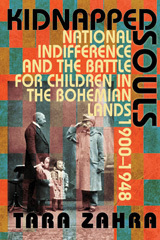
tag:news.nd.edu,2005:News/18521 2011-02-15T16:52:00-05:00 2021-09-03T21:01:46-04:00 Rising historian wins $10,000 Shannon Prize Kidnapped Souls by Tara Zahra

The University of Notre Dame’s is pleased to announce that Tara Zahra has been awarded the $10,000 Laura Shannon Prize in Contemporary European 91Ƶ for her book “Kidnapped Souls: National Indifference and the Battle for Children in the Bohemian Lands 1900-1948,” published by Cornell University Press (2008).

The Shannon Prize is presented annually to the author of the best book in European studies that transcends a focus on any one country, state or people to stimulate new ways of thinking about contemporary Europe as a whole, and rotates between the humanities and history and social sciences. This is the inaugural award for the history and social sciences cycle, which judged nominated books published in 2008 and 2009.

The jury commended Zahra’s book, stating:

“A work of extraordinary scholarly creativity and excavation, Tara Zahra’s “Kidnapped Souls: National Indifference and the Battle for Children in the Bohemian Lands 1900-1948” explores Czech-German relations in the first half of the twentieth century to address from a fresh archival angle larger questions about national identification, indifference, and the use of constituencies for national agendas. Working deeply in multiple national archives, Zahra examines policies toward children and schooling in a border region of Bohemia in which partisans of Czech and German identity competed for allegiance. Without ever losing sight of big questions or Hauptpolitik, Zahra enlivens every page with vivid detail and takes us into ordinary lives to show not that national identity is merely a matter of cultural and political circumstance, but that particular circumstances cause claims on identity to work in different ways. A model monograph, with interesting lessons for the future of multilingualism in European educational systems.”

The final jury was composed of Nancy Bermeo, Nuffield Professor of Comparative Politics, Nuffield College, University of Oxford; Laura Engelstein, Henry S. McNeil Professor of History, Yale University; Felipe Fernández-Armesto, William P. Reynolds Professor of History, Notre Dame; James Sheehan, Dickason Professor in the Humanities, Emeritus, Stanford University; Catherine H. Zuckert, Nancy Reeves Dreux Professor of Political Science, Notre Dame.

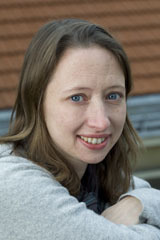
Tara Zahra

Zahra will accept the award and present a lecture in the fall semester of 2011 at Notre Dame. Zahra is assistant professor of history at the University of Chicago (associate professor as of July 2011), where she has been teaching the history of modern Central and Eastern Europe since 2007. Her research focuses on transnational approaches to the history of modern Europe. She aims to challenge nationalist approaches to European history, and to integrate the history of Eastern Europe into broader histories of Europe and the world. Recent work has focused on the history of nationalism, the family, displacement and international humanitarianism in the 20th century. Before coming to Chicago, she was a junior fellow in the Harvard Society of Fellows, and completed her Ph.D. in history at the University of Michigan. Her next book, “The Lost Children: Reconstructing Europe’s Families after World War II,” is forthcoming in 2011.

The Shannon Prize jury also awarded honorable mention to Mary Elise Sarotte for her book “1989: The Struggle to Create Post-Cold War Europe,” Princeton University Press (2009).

The Nanovic Institute is committed to enriching the intellectual culture of Notre Dame by creating an integrated, interdisciplinary home for students and faculty to explore the evolving ideas, cultures, beliefs and institutions that shape Europe today. For additional information about the Nanovic Institute, the Shannon Prize, and the authors, please see nanovic.nd.edu.

Contact: Monica Caro, 574-631-3547, mcaro@nd.edu

Originally published by Monica Caro at on February 15, 2011.

]]>
Monica Caro
tag:news.nd.edu,2005:News/14640 2010-02-15T15:08:00-05:00 2021-09-03T21:00:48-04:00 Dainotto wins $10,000 Nanovic book prize Roberto M. Dainotto

The University of Notre Dame’s Nanovic Institute for European 91Ƶ has awarded the $10,000 Laura Shannon Prize in Contemporary European 91Ƶ to author Roberto M. Dainotto for his book “Europe (In Theory),” published by Duke University Press (2007).

The Shannon Prize is presented annually to the author of the best book in European studies that transcends a focus on any one country, state or people to stimulate new ways of thinking about contemporary Europe as a whole, and rotates between the humanities and history and social sciences. This is the inaugural award for the humanities, which judged nominated books published in 2007 and 2008.

The jury commended Dainotto’s book, stating:

“Written by an academic but readable by all, Dainotto’s ‘Europe (In Theory)’ incisively analyzes how important theories about Europe have long relied on the construction of an ‘Oriental other’ within Europe’s own borders. Showing how Europe’s southern territories were used in this way, Dainotto’s book transcends a focus on any one country and places Eurocentric ideology into serious question more generally.

“It contains original reworkings of genealogies such as those of European history and European literature, and first-class analyses of Montesquieu, Voltaire, Madame De Stael and Hegel. Thus, ‘Europe (In Theory)’ presents an admirable synthesis of the critical and theoretical literature on the history of the idea or theory of Europe and offers a critical perspective on the question. Forceful, biting, compelling reading.”

The final jury was composed of Piero Boitani, professor of comparative literature, University of Rome, La Sapienza; Theodore J. Cachey, Jr., Albert J. Ravarino Family Director of Dante and Italian 91Ƶ, professor and chair of the Department of Romance Languages and Literatures, Notre Dame; Donald Crafton, professor and chair, Department of Film, Television, & Theatre,; Margaret W. Ferguson, professor of English, University of California, Davis; and Christopher B. Fox, professor of English and director of the Keough-Naughton Institute for Irish 91Ƶ, Notre Dame.

Dainotto will accept the award and present a lecture on Sept. 23 at Notre Dame. Dainotto is professor of Romance studies and of the Literature Program at Duke University, where he has been teaching modern and contemporary Italian literature since 1998. His research focuses on the relationship between writing and places (real or imaginary). A native of Italy, Dainotto did his undergraduate work at the University of Catania. He completed his master and doctorate degrees in comparative literature at New York University.

The Shannon Prize jury also awarded honorable mention to B. Venkat Mani for his book, “Cosmopolitical Claims: Turkish-German Literatures from Nadolny to Pamuk,” Iowa University Press (2007); and to Karen Newman for her book, “Cultural Capitals: Early Modern London and Paris,” Princeton University Press (2007).

The Nanovic Institute is committed to enriching the intellectual culture of Notre Dame by creating an integrated, interdisciplinary home for students and faculty to explore the evolving ideas, cultures, beliefs and institutions that shape Europe today. Additional information about the Nanovic Institute, the Shannon Prize and the authors is available .

]]>
Monica Caro