
Chronic obstructive pulmonary disease (COPD), a chronic condition that causes increasing difficulty in breathing as it progresses, is the . The clinical diagnosis and monitoring of COPD and other pulmonary diseases can be taxing, often requiring blood testing, which can be uncomfortable for patients, or costly imaging procedures, such as CT scans. Additionally, COPD flare-ups can , significantly increasing the risk of death.
Exhaled breath condensate (EBC) measurement offers a noninvasive approach to COPD monitoring that also has the potential to enable timely intervention. as a method for diagnosing disease by researchers in the 1970s, EBC measurements rely on affordable, portable point-of-care equipment to collect and cool a patient’s exhaled breath, reducing the need for blood draws and offering a more accessible mode of detection for under-resourced or remote populations. The liquid condensate is then tested for biomarkers.
Inconsistencies between repeated measurements, however, have presented a significant challenge to the clinical implementation of EBC testing since it was first proposed. The prevailing scientific understanding is that this variation is biological, leaving little hope for standardization. To meet this challenge, researchers led by , assistant professor in the , are taking a new approach by investigating the transition between the gas and liquid phase as a primary driver of biomarker loss during sample collection.
“EBC measurement has the potential to change the standard of care for so many patient groups—not only COPD patients, but also diabetic patients, preterm infants, and many more— but is being held back by a lack of standardization,” said Ma, who leads Notre Dame’s . “Once we correct for the variability in these measurements, we can design new collectors that can be trusted for diagnosing these patient groups in the clinic.”
Research led by Ma’s group and published in dispenses with the assumption that the quantity of EBC biomarkers remains constant in samples over time. Using the lab’s home-built fluorescence measurement platform to visualize droplet-level transport, his team has found that EBC droplets can lose significant biomarker content within a single breath cycle due to evaporation.
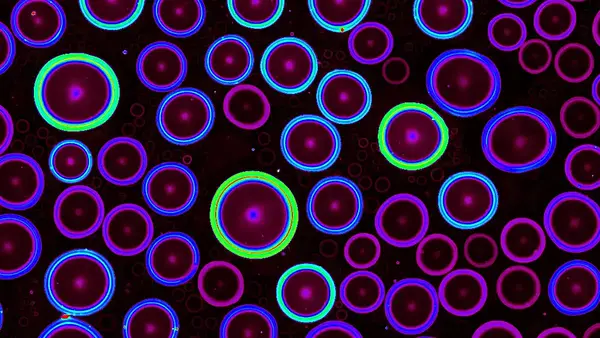
To investigate the phase changes occurring during EBC collection, the researchers focused on two physical processes: co-condensation—the extent to which relevant biomarkers are incorporated as droplets are formed—and evaporation, measuring how much of a target compound is lost to the air during collection and processing. By tracking losses during these two processes, Ma’s research group developed a mathematical model for biomarker loss in single droplets and extended it to the droplet population that would form on a real condenser surface.
The researchers found that droplet size played a critical role in whether or not significant losses were observed and that pauses between breaths corresponded to greater evaporative losses, based on a series of tests mimicking patient sample collection that controlled breath duration, pauses, and collection time. Alongside droplet size and pauses between breaths, they have identified ambient temperature, humidity, and collection plate temperature as variables to investigate further.
“This is a promising first step; demonstrating that there are concrete and measurable sources of error in EBC collection shows us that we have a shot at creating a standardization system that allows clinicians to reliably use EBC in disease diagnosis,” said , a doctoral student in the Interfacial Thermofluids Laboratory and the lead author of the paper. “The next step in that process is to separate the different parameters that control the variation so that we can create that system.”
In the next phase, the group is looking to partner with researchers across disciplines as well as clinicians. Supported by an inaugural and the, they aim to continue to shed light on EBC’s potential as a robust clinical method.
“It’s going to require a collaborative effort to get EBC from the research phase to real clinical application,” Ma said. “I like to think of us as a bridge connecting the engineering efforts to the planning efforts. We have incredible support from our internal grants, and as our work progresses we are seeking future partnerships with device developers and medical doctors who share the goal of making care more manageable for patients.”
Ma is a faculty affiliate of the , , the , and the . Several Notre Dame core facilities supported this work, including the and the .
Contact: Brandi Wampler, associate director of story development, 574-631-2632, brandiwampler@nd.edu
Originally published by at on October 07, 2026.
]]>