ND-TEC’s three-part missionis to support multidisciplinary research on questions regarding the impact of technology on humanity, to assist in the development of curricula that engage students on technology ethics issues and to collaborate with thought leaders in industry, nonprofit organizations and governmental agencies on the development of technology policy.
Martin is a nationally recognized expert in privacy, technology and corporate responsibility. She joined the Notre Dame faculty and ND-TEC in 2020 and also holds a tenured appointment in the Department of Information Technology, Analytics and Operations in the.
“Kirsten’s expertise, leadership and vision make her an ideal choice to succeed Mark in this important role,” said Maura Ryan, vice president and associate provost for faculty affairs. “She has been with the center since its early days, and as director will bring new energy and fresh ideas to its work.”
Martin aims to position the center as a thought leader in technology ethics and a place that emphasizes the impact of new and emerging technologies on human values.
“Through the work of the center and our applied research arm, the , the University and its collaborators have an opportunity to be an influential voice in the ethical development of technology,” Martin said. “I am grateful for the foundation Mark has built for us at ND-TEC. We have a dedicated and growing team, and we will continue to conduct important research and convene needed conversations about the technologies changing the way we work, live and interact with one another.”
Martin has published numerous articles on privacy and the ethics of technology in leading academic journals, including theJournal of Business Ethics,the Harvard Journal of Law and Technology, Business Ethics Quarterly, theWashington University Law Review and theJournal of Business Research,as well as in practitioner publications such asMIS Quarterly Executive.
With Ed Freeman and Bobby Parmar of the University of Virginia,Martin recently co-authored the book “The Power of AND: Responsible Business Without Trade-Offs,” published by Columbia University Press. She currently serves as technology and business ethics editor for theJournal of Business Ethics and also is a member of the advisory board for theFuture of Privacy Forum. She has a forthcoming book, “The Ethics of Data and Analytics,” with Routledge.
Martin earned her bachelor’s degree in engineering from the University of Michigan and her Master of Business Administration and doctoral degree from the University of Virginia’s Darden 91Ƶ of Business.
]]>Buttigieg, currently a faculty fellow at the , will discuss “Rebuilding Trust in Our Nation’s Institutions” at 8:15 p.m. EDT Oct. 21 (Wednesday).
To date, the six-part Bridging the Divide series has looked broadly at the need for in an age of misinformation and disinformation, explored the roots of in our society and discussed the and injustice in America.
The remaining three events in the series are as follows:
“The 19th Amendment and the Myth that All Women Vote the Same”
“Rebuilding Trust in Our Nation’s Institutions”
“Civil Dialogue and Free Expression on College Campuses”
Sponsored by the Office of the Provost in partnership with the and the , Bridging the Divide is free and open to all members of the Notre Dame community as well as the public.
The series is broadcast through the Notre Dame Alumni Association website ThinkND. Advance registration is required at .
]]>Called , the series will take the form of weekly, one-hour interviews between a moderator and two to three panelists.
The first event in the series is scheduled for 7 p.m. Sept. 30 (Wednesday) and is titled Experts from Notre Dame and Vanderbilt University in the areas of writing and rhetoric, cognition and cognitive neuroscience, and network science and machine learning will discuss the pervasiveness of false information in our current environment, how to protect oneself against it, and the importance of truthfulness and fact-based arguments in civil discourse.
The full schedule for the six-part series is as follows:
“Beyond Good Manners: Promoting Civil Discussion on Issues that Divide Us”
“Political Polarization in America”
“Exploring Racial and Social Injustice and Inequality in America”
“The 19th Amendment and the Myth that All Women Vote the Same”
“Civil Dialogue and Free Expression on College Campuses”
“Reclaiming the Middle: Building Consensus in Government”
Sponsored by the Office of the Provost in partnership with the and the , Bridging the Divide is free and open to all members of the Notre Dame community as well as the public.
The series will be broadcast through the Notre Dame Alumni Association website . Advance registration is required at .
]]>“Since becoming dean, Mary has worked tirelessly to recruit world-class faculty members, increase support for students entering scientific fields and create new future-focused degree programs for our students,” said , the Charles and Jill Fischer Provost. “She also has gone out of her way in this, my first year at Notre Dame, to make me feel welcome not only as provost but also as a member of the faculty in the College of Science. While I was disappointed when she told me of her decision, I respect why she made it and fully support her.”
An accomplished scientist with extensive experience in the academic, government and private sectors, Galvin is a professor in the . She came to Notre Dame from the National Science Foundation, where she had been director for the Division of Materials Research.
Among the highlights of Galvin’s tenure as dean of the College of Science has been the hiring of 80 faculty members, including the current directors of the Warren Family Research Center for Drug Discovery and Development and the Eck Institute for Global Health. She oversaw the creation of interdisciplinary graduate programs in biophysics and, with the College of Engineering, materials science and engineering, as well as an online master’s program in data science.
Research funding awarded to the College of Science and its faculty topped $60 million in the 2020 fiscal year, a 46 percent increase compared to Galvin’s first year as dean. To ensure all undergraduates have the opportunity to conduct research, she established a sliding scale for stipends so that students do not have to choose between participating in summer research or getting a job. She also has directed resources to better support low-income and first-generation students.
“My work as dean over the past five years has been enormously fulfilling,” Galvin said in a letter to the College of Science’s faculty and staff members. “I came to Notre Dame for the purpose of raising our research profile and enriching the experience for our undergraduates.It was only when I was in the role that I fully grasped the excellence of our University leaders and their dedication to our distinctive Catholic research university mission. Only then did I appreciate the extraordinary accomplishments of our students and outstanding faculty. And only then did I understand the commitment of staff members, department chairs and colleagues in the dean’s office to the work of the college.”
An interim dean will be appointed to lead the College of Science during the spring 2021 semester while an international search is conducted to identify Galvin’s successor.
]]>
At every home football game, the provost will recognize a different member of the 2017 Notre Dame All-Faculty Team. The honoree for the Oct. 28game vs. N.C. State was MaryaLiebermanfrom the College of Science.
Originally published by at on October 26, 2017.
]]>
At every home football game, the provost will recognize a different member of the 2017 Notre Dame All-Faculty Team. The honoree for the Oct. 21game vs. USCis Mark McKennafrom The Law 91Ƶ.
Originally published by at on October 19, 2017.
]]>With the start of the 2017-18academic year, the University was pleased to welcome some 100 new members to its faculty.
NDWorks, the faculty/staff newspaper, recently profiled this group of scholars, asking them, among other things, what attracted them to Notre Dame.
Originally published by at on October 02, 2017.
]]>
At every home football game, the provost will recognize a different member of the 2017 Notre Dame All-Faculty Team. The honoree for the Sept. 2 game vs. Temple wasEd Maginn from the College of Engineering.
Originally published by at on August 31, 2017.
]]>
Patrick Flynn has been appointed interim director of Notre Dame California.
Read more: .
]]>
Mark Weber, a 2009 University of Notre Dame graduate, describes Notre Dame’s annual Bengal Bouts boxing tournament not in terms of rings and gloves but as “a great tradition of young men giving their blood and sweat in the fight against global poverty.”
If you’re thinking this sounds like a film just waiting to be made, then you’re thinking like Weber.
A double major in film, television and theatre (FTT) and the Program of Liberal 91Ƶ – as well as the 2008–09 Bengal Bouts president – he has teamed with FTT faculty member William Donaruma to produce “Strong Bodies Fight,” a documentary about the distinctive program (). The title is inspired by the bouts’ longtime mantra: “Strong bodies fight, that weak bodies may be nourished.”
“It is not about fighting each other,” said Donaruma, who also is the film’s director. “It is about fighting for a cause and helping each other.”
Starting with the first tournament 79 years ago, all proceeds from Bengal Bouts ticket sales—more than $50,000 in 2009—have been directed to the Holy Cross Missions in what was once called East Bengal and today is Bangladesh. Part of the work of the Congregation of Holy Cross, Notre Dame’s founding religious community, the missions spearhead a variety of educational and outreach initiatives in the impoverished country.
Weber thought a film about the tie that binds Notre Dame’s student boxers to the missions would raise awareness of the Holy Cross programs and how to support them. His original intent was to go to Bangladesh by himself with a small handheld camera and shoot footage for a “mini-documentary,” but that plan grew to include four of his teammates.
“As a student, I saw the potential to provide a tremendous educational experience for our boxers,” Weber said. “As the president of Bengal Bouts, I saw the opportunity to transform our connection with Bangladesh from a mere check into a real relationship.”
Fellow boxers weren’t the only people interested in adding their names to the lineup. Weber approached Donaruma about the project around the same time he began discussing it with his peers, and Notre Dame alumnus John Klein later joined the crew as cinematographer.
The group traveled to Bangladesh in May 2008 with three high-definition cameras in tow, the filmmakers capturing the boxers’ journey as they met those who work in the missions and the people they serve. Back at Notre Dame, Donaruma guided the transformation from raw footage to finished film, as he and Weber combined elements of the trip and the bouts themselves to create what is now a feature-length documentary.
“The most rewarding part of the project,” Donaruma says, “has been the experience of visiting that region of the world and that we seemed to really capture an essence of hope, pride and beauty of the country and not just the idea of despair.”
Contact: Mark Weber, mweber6@alumni.nd.edu, William Donurama, wdonarum@nd.edu
]]>
Though not quite the stuff of a Norman Rockwell painting, a husband reluctantly heeding his wife’s request to abandon the couch and go to church is an appropriate scene to depict what two University of Notre Dame sociologists call “one of the most consistent findings in the sociology of religion”: Women are more religious than men. But why?
Jessica Collett and Omar Lizardo, assistant professors of sociology, believe the risk-aversion hypothesis developed by the late Alan Miller and Baylor University’s Rodney Stark is the best explanation. It draws on a considerable amount of data that indicates women aren’t as likely as men to engage in high-risk behavior, such as committing a crime. Miller and Stark applied the same principle to people’s attitudes about faith, arguing that the more prone someone is to follow society’s rules, the less inclined he or she will be to ignore religion and risk losing the supernatural rewards associated with it.
As for why women tend to be more risk averse, Miller and Stark wrote that it may be due to physiological differences between the sexes. However, Collett and Lizardo think there are other forces at work, as well.
In an article published in the June issue of the Journal for the Scientific Study of Religion (JSSR), they present research they’ve completed that explores the topic from a sociological perspective.
“We draw on a theory from criminology, called power-control theory, which suggests there are social roots of such risk preferences,” Collett says, “specifically that in patriarchal homes, there is more control exerted over young women by their mothers, resulting in a distaste for risk compared to men raised in those homes.”
Power-control theory defines egalitarian homes, on the other hand, as those where the mother has a high socioeconomic status, measured in terms of her standing in the workplace, making the family less likely to follow traditional gender scripts. In this environment, one would expect boys and girls to develop attitudes toward risk-taking that more closely resemble one another.
Collett and Lizardo, following a line of inquiry Miller identified but did not pursue, hypothesized that the family structures described by power-control theory could impact the choices women make about religion, based on the assumption that those decisions involve a calculation of risk. To test this idea, they analyzed data gathered from 1994 to 2004 through the National Opinion Research Center’s General Social Survey, focusing on demographic traits as well as church attendance, frequency of prayer and strength of religious affiliation.
“In these egalitarian homes, girls are likely treated more like their brothers … and [as adults] end up with similar rates of religiosity as men,” she says, a finding that implies biology alone can’t be responsible for the discrepancy in the general population. “While we don’t have access to the measures of parental control in this data—and we are only able to look at gender, religiousness and parental socioeconomic status—we use power-control theory’s arguments about the exertion of control to explain why mothers’ increased occupational status results in less religious daughters.”
Titled “A Power-Control Theory of Gender and Religiosity,” Collett and Lizardo’s paper appears in JSSR along with three responses from others in the field.
Contact: Jessica Collett and Omar Lizardo, jcollet1@nd.edu and olizardo@nd.edu
]]>
Unless you authored one of the 22 research papers submitted to the inaugural Bernoulli Awards last April, chances are you havent heard of this competition for University of Notre Dame undergraduates. As such, youd also have no way of knowing that winning entails a bit more than a firm handshake and a certificate suitable for framing.
How much more? First prize carries an award of $5,000; second and honorable mention are worth $2,500 and $1,000, respectively.
Not a bad way to encourage students to get involved with applied statistical research.
I doubt that the Bernoulli Awards are unique,but they are certainly uncommon in the way that they combine three aspects of other types of awards,says Richard Jensen, chair of Notre Dames Department of Economics and Econometrics, which sponsors the competition.First, they are based on original research by undergraduate students. Next, they are open to any student whose research uses statistical methods. And last, the size of the prizes is large, compared to others devoted to undergraduate research of which I am aware.
Visitors to the Economics and Econometrics Web site ( ) will find an additional detail that adds to the distinctiveness of the Bernoulli program: While a call for papers will be made annually, there is no guarantee that first prize or any other award will be issued.
The idea was to set criteria so that awards are based upon external standards of excellencenamely publication standards in the relevant disciplinerather than based upon a competition among Notre Dame students in a given year,Jensen said.
These criteria were inspired by the benefactor who envisioned and funded the Bernoulli Awards, a Notre Dame alumnus who wishes to remain anonymous. As an undergraduate, he wrote a paper that was accepted by and published in a peer-reviewed journal (one in which submissions are vetted by a group of scholars in that journals field), and the program hes created recognizes those poised to do the same.
To earn first prize, a students paper must be judged by a Notre Dame faculty panel to be worthy of publication in a leading peer-reviewed journal. A second prize is given when a paper could be brought to this level after some revision. And when ones work isnt deemed ready for a top journal but nonetheless offers analysis that goes well beyond a typical senior honors thesis, it receives honorable mention.
This makes the competition much more difficult, but it also makes the awards much more meaningful,Jensen said.Conversely, under these criteria, the panel of judges can also select more than one award in each category, if it concludes that more than one submission meets the external standards.
Year one of the awardswhich are named after the Bernoulli random variable, the most common random variable in statisticssaw eight winners. Andrew KarlsPseudorandom Numbers: Generation, Statistical Measures, Monte Carlo Methods, and Implementation in C++received a second prize, and the other seven garnered honorable mention. Karl graduated in May.
Underscoring the breadth of research the competition aims to support, the winning entries came from the Colleges of Arts and Letters, Engineering and Science. They are papersthat use statistical methods to analyze applied problems that are judged important, timely and original.
Senior Joe Basconi, for instance, worked under the guidance of Jeffrey Kantor, professor of chemical and biomolecular engineering, to study the adoption of daylight-saving time in Indiana in 2006, finding that it significantly reduced daily net energy consumption in the states central counties. Karen Stockley and Ann Walter, 2008 graduates, submitted a coauthored paper exploring eligibility requirements for the State childrens Health Insurance Program, which serves kids who dont qualify for Medicaid but whose families cant afford private coverage. Their advisor was William Evans, professor of economics and econometrics, who is noted for his work in health economics, among other areas.
I greatly appreciated his accessibility and willingness to meet and discuss the project,Walter says of Evans.He provided us with guidance, suggestions and helped us overcome obstacles.
Entries for the next round of Bernoulli Awards will be accepted near the end of the academic year. This should give interested students ample prep time for what seems destined to become one of the most talked about undergraduate competitions on campus.
TopicID: 29568
]]>
In many ways, the story of how Mike Desch came to join the University of Notre Dame faculty is a familiar one: Leading scholar gets offered a position at a different university and must carefully weigh his options, with would-be colleagues telling him how excited theyd be to have him and the current institution asking him to stay.
But Desch also received some especially high-level advice – a conversation with former President Bush – before making his decision.
The namesake of Texas A&Ms Bush 91Ƶ of Government and Public Service, where Desch had been on the faculty since 2004, the 41st president told the international relations expert how valuable he was to that university. Flattered by the sentiment, Desch nevertheless made the difficult choice to move, accepting a position as a professor in Notre Dames Department of Political Science.
What tipped the balance for me was the fact that Notre Dame is a great Catholic university, with equal emphasis on both adjectives,he says. Desch, who was the Bush 91Ƶs first Robert M. Gates Professor of Intelligence&National Security Decision-Making and the founding director of its Scowcroft Institute of International Affairs, starts in his new position this fall.
Mike Desch is a distinguished addition to our department,says department chair Michael Zuckert, Nancy Reeves Dreux Professor of Political Science.He is not only an eminent scholar in the field, but he has a track record as a program-builder. He has, for example, been planning a new initiative to bring in speakers and fund activities for the international relations faculty. He also has been exploring the implications for Notre Dame of the new Minerva program to be sponsored by the Department of Defense.
Deschs most recent book deals withdemocratic triumphalism,a term he coined to describe an emerging belief among scholars and policymakersthat democracies are uniquely virtuous and capable in international affairs.He notes that those who embrace this idea tend to assume democracies wont go to war with each other.
Recently, a variation of this argument has attracted lots of attention: the belief that when democracies go to war with non-democracies, they are more likely to win those wars,he said.
InPower and Military Effectiveness: The Fallacy of Democratic Triumphalism,published earlier this year by the Johns Hopkins University Press, Desch shows that the statistics used to support this theory are flawed. He argues that democracy and military effectiveness have their roots in the same factors, such as high levels of aggregate wealth and development, but that the one does not predict the other, meaning their relationship is coincidental and not a case of cause and effect.
This finding is important not only analytically, but it also has important policy implications,says Desch, who will teach three undergraduate courses and a graduate seminar this year.To whit, democracies should not overestimate their military prowess, as we unfortunately did in Iraq.
Like many others who decide to come to Notre Dame, Desch does have a family connection to the University, although fittingly, there is a distinctive twist. While both his grandfather and his dad were alumni, Grandpa Gus played football and ran track for Knute Rockne, as well.
President Bush, Gen. [Brent] Scowcroft, Secretary [of Defense Robert] Gates have all been very understanding of my decision, particularly once they learned of my family connection to ND,Desch says.I am hopeful that well be able to get them to visit South Bend down the road.
TopicID: 28946
]]>
When we talk about aging, we often think strictly in terms of those who have, well, aged the most. And yet for Cindy Bergeman, professor of psychology at the University of Notre Dame, doing so would be akin to describing a two-hour movie after missing the first 90 minutes.
Many of the diseases of old agee.g., heart disease, diabetesmay be due to combinations of stress experiences that in fact happened much earlier in the life course,says Bergeman, who is studying 40- to 60-year-olds to learn more about how people approach the complex demands of midlife.It is also the case that the protective mechanisms that we are interested in are also developed much earlier in life and are maintained and expanded as we age.
HerNotre Dame Study of Health and Well-Being,to which shes added the midlife component, initially focused on people in the 60 to 75 age group. Having received funding for preliminary data collection from the Universitys Institute for Scholarship in the Liberal Arts, it is currently supported by two multiyear grantstotaling $1.8 millionfrom the National Institute on Aging.
The study tracks participants for five years, asking them to complete annual questionnaires that assess characteristics such as health, psychological well-being and perceptions of stress. In the first, third and fifth years, each participant also keeps a daily diary for 56 days.
Bergeman, a developmental psychologist and chair of Notre Dames Department of Psychology, says faculty in itsworld-classQuantitative Program provide the tools necessary to unearth trends indicated by the raw data collected through the questionnaires and diaries. This type of analysis is innovative in and of itself; combining it with insights gained from in-person interviews, which she and her student team periodically conduct with a subset of the participants, makes for a truly distinctive brand of research.
Most studies use one or the other approach,Bergeman says.Few studies use both.
Preliminary findings, which will soon be available on the Web at , suggest strategies to help people age better have to be tailored to specific circumstances and arent universal.
Our work has shown that it is the fit between the attribute of the individual, such as personality, and the aspects of the environmentfamilial and community support factorsthat may result in the most optimal health outcome,Bergeman says.
She notes, however, that getting midlife participants is a challenge because, ironically enough, theyre too busy handling all those competing demands, the very dynamic she wants to explore.
For all we know about the aging process, we still dont know very much,Bergeman says.Is it the luck of the draw? The spin of the roulette wheel? Or is it something that we control?
Anyone between the ages of 40 and 60 who is interested in participating in this study may contact Bergeman by e-mail at " cbergema@nd.edu ":mailto:cbergema@nd.edu _for more information.
_
TopicID: 28906
]]>
No matter what the subject,youngestandbestarent two adjectives that regularly associate with each other, as how long something has been around tends to place an upward bound on how highly were willing to value it.
But that hasnt stopped the Quantitative Program in Notre Dames Department of Psychology from giving the oldRome wasnt built in a daymentality a run for its money.
Consider that when Scott Maxwell, Matthew A. Fitzsimons Professor of Psychology, came to Notre Dame in 1982 as an associate professor, he was the departments lone quantitative faculty member and would be for some years to come. It wasnt until fall 1999 that the program was formally organized, which, according to Maxwell, makes it one of the youngest in the country.
In its short existence, however, it has seen three of its faculty recognized with the Society of Multivariate Experimental Psychologys prestigious Cattell Award for early career accomplishment, including 2007 winner Gitta Lubke; since 1990, no other university has had more than two recipients of this honor.
If you look at the list of names who have won that award previously, its a great recognition that my name would be included,says Lubke, an associate professor. Notre Dame has had a total of four winnersMaxwell, Steve Boker, Ke-Hai Yuan and Lubke, although Boker accepted a position at the University of Virginia last year. Even so, the department is home to more recipients of the award than any other psychology department in the United States.
It says the obvious, I think, that we are one of the leading programs in the country with respect to the faculty we have,Lubke notes about the distinction. That cohort also includes Anre Venter and Guangjian Zhang, and with the addition of three assistant professors this fall, the department now has one of the largest quantitative groups amongst its peers.
I think the year has come that the Quantitative Program at Notre Dame is going to be very much on the map in the U.S.,Lubke says.
Because of the increasing level of methodological sophistication required in all branches of psychological research, quantitative expertise is at a premium. The new faculty have specific interests within their diverse research agendas that make them particularly good fits for the department.
Hiring Alison Cheng, for instance, addresses the area in which the program has had the most difficulty adding a specialist: item response theory, which is more or less the math behind the measurement of psychological traits. Cheng, who completed her doctorate at the University of Illinois, primarily uses the theory to examine latent traits, focusing on aptitude and proficiency in an educational context.
Lijuan Wang received her doctorate from the University of Virginia. Her work in longitudinal data analysis will contribute both to what has become a defining aspect of quantitative psychology at Notre Dame and to the departments strong Developmental Program.
Like Wang, Johnny Zhang earned his doctorate from Virginia and will play a central role in the departments efforts in longitudinal research. Hes also part of a small contingent of psychologists using cutting-edge Bayesian methods, a computer-intensive alternative to classical statistics that allows researchers to integrate new findings with what they already know.
It was no small feat attracting these three scholars in one recruiting season. Maxwell says a recent American Psychological Association task force reported there were twice as many faculty openings in quantitative psychology as there were new doctorate recipients. This, he believes, makes it even more important to maintain an environment that engages all faculty but especially those just starting out in their careers.
The whole department is a very collegial group of people,Maxwell says,and from the day I arrived, I think everybody supported everybody. Its always been a place that has appreciated what junior faculty have to offer and has high standards but also provides support that helps people to meet those standards.
That the quantitative faculty and their counterparts in the more applied areas do indeed get along is a point Lubke feels is worth emphasizing. Historically, the field of psychology has been characterized by tension between the two. At Notre Dame, shes found that the Quantitative Program truly isembeddedin the department.
She has similar praise for the University in general. Quantitative psychologists often must branch out beyond their own departments to gain access to the data they need, and she describes Notre Dame asvery flexiblewhen it comes to allowing faculty to take research leave and collaborate with scholars elsewhere.
I can see the benefits for my career,Lubke says.They are tremendous.
In addition to the current faculty, Maxwell credits Boker and Cindy Bergeman, chair of the department and a professor in the Developmental Program, for helping set the Quantitative Program on such a firm foundation. As it continues to grow, hed like to see the program become more involved in undergraduate education and other quantitative initiatives, ideally enhancing opportunities for interdisciplinary teaching and research in statistics.
Given how much progress has been made since he first set foot on campus, those seem to be relatively modest goals.
Now, I think we really have developed a reputation around the country of training [graduate] students in our own program and in the other programs in the department in a way that makes them distinctive on the job market,Maxwell says.Several of our students in other programs are now teaching graduate-level quantitative courses at places where theyve taken academic positions. And the idea that that couldve happened in 1982 was just unthinkable.
From: Ted Fox, College of Arts and Letters
TopicID: 28586
]]>
Established in 2001, Notre Dames Program in American Democracy (PAD) hosted its 39th guest speaker earlier this year. The scholars who have given lectures as part of the seriessome prominent voices in the field, others promising young assistant professorshave tended to share the same thought with Christina Wolbrecht, associate professor of political science, before leaving campus.
They always say this to me: I had no idea that Notre Dame had this great of a graduate program [in political science]. I had no idea that all these faculty were all here together.
These visitors arent alone in their enthusiasm.
This spring, Notre Dame received a $10 million gift from the Francis and Kathleen Rooney Foundation to turn PAD into the Rooney Center for the Study of American Democracy.
This is huge,says Wolbrecht, who served as PADs director for the last six years.I think its fair to say you could use the word transformative.
Thanks to the Rooneysgift, three new faculty will be hired in the American politics subfield within the Department of Political Science. Faculty working in this area, who also form the faculty of the Rooney Center, currently number 14, including the 2007-08 presidents of both the American Political Science Association (Dianne Pinderhughes, professor of political science and Africana studies) and the Midwest Political Science Association (Rodney Hero, Packey J. Dee Professor of American Democracy).
The endowment will support student-centered initiatives, as well. At the graduate level, where students regularly join faculty to workshop in-progress research, the Rooney Center will provide funds so the Department can offer more attractive stipends to the top doctoral candidates in American politics. Undergraduates interested in conducting research or participating in an internship program will be able to apply for grants designed to make such experiences easier to afford.
Theres probably no better question for an undergraduate to ask at this or any other university than What does it mean to say that America is a democracy?says David Campbell, John Cardinal OHara, C.S.C., Associate Professor of Political Science. Campbell, who will take over as director in January, notes that the Rooney Center is well-equipped to help students formulate their answers due to its focus on issues of leadership, citizenship and public service; the politics of democratic inclusion; constitutional studies; and the role of religion in a democratic society.
We have a number of faculty who come at that basic question from a variety of angles,he says.So we hope that as undergraduates go through political science or specifically American politics at Notre Dame, theyre going to be exposed to a number of different ways to think about that question.
Students and faculty alike will continue to have the opportunity to interact with scholars from across the country through events sponsored by the Rooney Center, such as conferences likeA Matter of Faith? Religion in the 2004 Presidential Election,which was held at Notre Dame in 2005. In addition to organizing the conference, Campbell edited a book by the same name that consists of the papers that were presented. He says its the only book that gives the complete story of religions role in the election.
There are some that come close, but what that book does is talk about the whole range of the way religion does and does not affect American politics. Its hard for me to think of a topic thats better suited to Notre Dame.
The guest speaker series has been similarly successful. To date, it has featured John Aldrich (Duke University), Larry Bartels (Princeton University), Cathy Cohen (University of Chicago), Diana Mutz (Pennsylvania University) and the late Richard Neustadt (Harvard University), among many others.
With the new center serving, according to Campbell,as the focal point for the study of American democracy at Notre Dame,Wolbrecht thinks word about all thats happening there is going to spread.
That would be my goal for the Rooney Center,she says,that scholars would be able to say, Oh yeah, I attended a Rooney Center conference a couple years ago; it was a great, productive event that brought together really interesting people,or, I was invited out by the Rooney Center to give a talk and got great feedback,those sorts of things. It starts showing up on peoples C.V.s. People recognize these centers as places that produce and distribute important knowledge.
The Rooney Center eventually will be located in the Universitys new social sciences building, which will be built next to the Hesburgh Center, home to Notre Dames Kroc Institute for International Peace 91Ƶ and Kellogg Institute for International 91Ƶ.
This is a campus where theres going to be a lot going on thats going to feed your research, your teaching, your intellectual interests,Wolbrecht says when asked what she would tell prospective faculty about Notre Dame.
Campbell agrees.
The University, because of this generous donation, has made a serious commitment to build in American politics,he says.At a time when many other universities are cutting back and facing restraints, Notre Dame is growing and moving forward. And so if they come here, they know that this is a place where they will find a thriving intellectual community with the resources necessary to make it happen.
TopicID: 28326
]]>
On a college campus, spring cannot pass into summer without graduation and the flood of memories it triggers. At Notre Dame, its not all that uncommon for these stories to involve a student who had, say, a somewhat singular focus on where he or she wanted to go to school.
Take Sioux Falls, S.D., native John McGreevy, for instance. His parents encouraged their children to attend a Catholic college or university, but he says his dad, a Notre Dame alum, didnt pressure him about which one he should choose.
No, he admits he needed little convincing to becomethe kind of kid who scares the Admissions Officewith his unflinching loyalty to the University.
I have a vivid memory of coming home. The [acceptance] letter had come, but my dad had already opened it, which was characteristic, and he had put it on the door,McGreevy says.And when I walked in, I remember how excited I was to be admitted. Really, this is the only place I considered going.
But despite his ability to recount this story with the clarity of a recent graduate, he isnt a member of the Class of 2008, although the history majors do know him pretty well.
In April, McGreevya 1986 Notre Dame graduate who is a professor of history at the Universitywas named I.A. OShaughnessy Dean of the College of Arts and Letters, effective July 1. He succeeds Mark Roche, who has been dean for the last 11 years.
I dont think being an undergraduate here means Ill either be a successful or unsuccessful dean really, but theres something unusual in that a significant part of my life history is now attached to this place,McGreevy says.
That history has made for an interesting bit of Arts and Letters trivia. While five other undergraduate alumni of Notre Dame have gone on to serve as dean of the College, McGreevy is the first in 40 years to do so and the only one in that group not to be a priest of the Congregation of Holy Cross, the Universitys founding religious community.
It seems wholly appropriate, then, to dub this former resident of Alumni Hall aDouble Domer,a title usually reserved for someone who has earned two degrees from Notre Dame (he received his Ph.D. from Stanford University).
I have said to other people its not as if I was out there trying to become a dean somewhere else,says McGreevy, who is the author of two books, includingCatholicism and American Freedom: A History,which The New York Times calledbrilliant.I think this is a really important place and an important experiment in American higher education,he adds.
He often describes the University this way because he believes it has ventured into uncharted territory.
The overarching goal is to make Notre Dame a truly top universityone thats mentioned in the same breath as Stanford and Brown and the University of Chicagoand also seriously religious,he says.Thats an exciting, unusual project. I think dean of Arts and Letters is as important as any other job in trying to make that happen.
Before returning to Notre Dame in 1997, McGreevy was Dunwalke Associate Professor of American History and History and Literature at Harvard University. Since 2002, he has been chairperson of the Department of History, a position he will hold until the official start of his tenure as dean.
He points to a strong desire to see Notre Dame succeed as one of the reasons why he came to the University as a faculty member. But his personal history notwithstanding, he doesnt look at his alma mater through rose-colored glasses.
I will say Im not a Notre Dame nostalgist,McGreevy says.I think the education I received was better than the one my father received, even though his was a good education, and I think the education our students now are getting is even better. If theres something that charges me up, its to see both our undergraduate and graduate students really flourishing.
Incidentally, the details of how he found his way to the University a second time make for a good story, too, even if its one that lacks the drama of finding an acceptance letter taped to the front door.
When he graduated from Notre Dame, McGreevy wanted to teach but wasnt sure at what level, high school or college. Once he received his Ph.D., he knew that to a large extent, where he worked would be out of his control, as openings in the academic job market are limited and unpredictable.
And so in that sense,he says,theres luck and maybe destiny, I dont know, but a lot of my life now has been tied up with Notre Dame, and thats okay. I think if youre going to tie yourself to an institution, this is a good one to be tied to. I think its a great place.
TopicID: 28286
]]>
Of all the violence depicted in the movieThe Godfather,perhaps nothing stands out more than a man taking part in a baptism as others carry out hits in his name, a sinister scene that seems less Jekyll and Hyde and more the culmination of a descent from upstanding citizen to crime boss.
But as surprising as it might be, Michael Welch, professor of sociology at the University of Notre Dame, says most criminologists wouldnt link such a transformation to a corresponding change in ones conception of right and wrong.
They [criminologists] have tended to underplay the importance of morality as a mechanism of social control,he says, explaining that much of the work in the field has instead focused on the idea of self-control.
As it was originally defined, self-control theory posits that everyone is predisposed to misbehave for personal gain and that people simply differ in their abilities to resist indulging their urges.
The theory argues that most, if not all, social factors thought to be causes of or contributors to criminal and deviant acts are themselves affected by low self-control,Welch says.Thus, its effects are assumed to overshadow all others in accounting for many of the most important forms of misconduct.
For his part, Welch doesnt dispute the power of self-control. He just doesnt think it acts alone.
With North Carolina State Universitys Charles Tittle, one of the countrys leading criminologists, he is at work on a book that contendsmorality does indeed matter,playing a critical role in regulating behavior.
Their project considers crimes as well as acts that arent necessarily illegal but still violate social norms, such as sexual infidelity and lying. It is primarily based on a review of more than 250 empirical studies, each of which examined some aspect of the connection between moral attitudes and conduct. Welch and Tittle plan to analyze the impact of both morals that are religious in origin and those that are not, although most of the studies they have examined so far deal with the former.
It seems clear that different aspects of religious orientation tend to show modest, but consistently negative, empirical relationships with criminal or deviant behavior,Welch says.These persistent net relationships indicate that persons who hold religious beliefs and practice them are less likely to misbehave than their non-religious counterparts, suggesting clearly that religion can inhibit or deter misconduct.
In addition to these studies, which represent almost 80 years worth of findings, he and Tittle hope to incorporate results from surveys focused specifically on morality and deviance that were recently conducted in Russia, Greece and other countries. Welch says they believe this data will help them determine whether there are circumstances where beliefs that normally guide someones actions can beneutralized.
This concern about susceptibility to neutralization is perhaps the central issue that has led many criminologists to question the deterrent power of morality and, hence, its importance for criminological theory,Welch says.
TopicID: 28007
]]>
It would be a tall order for one sentence to convey the ways Notre Dames College of Arts and Letters has changed since Mark Roche was named I.A. OShaughnessy Dean 11 years ago. A line from an early Christmas address to the faculty, however, does at least place the length of his tenure in an appropriate context.
The College is saving a great deal of time and money by shifting most of its correspondence from paper to e-mail,said Roche, who announced last May that 2007-08 would be his final year as dean.
What a difference a decade makes.
The rapid rise of Web-based technology is somewhat analogous to the Colleges own advance in recent years. Both were built on ideas that were maybe once considered too ambitious or far-fetched but eventually became the expected standard, leading to developments few could have foreseen.
Theres a stronger culture of recognizing what it takes to be great as a university,Roche says, describing an important difference between the College in fall 1997 and spring 2008. And if not quite an information revolution, the body of work compiled by Arts and Letters faculty and staff during that time is remarkable nonetheless.
Over the past decade, for instance, the College has averaged $9 million per year in external research grants; the average was $1.4 million for the previous 10-year period. In addition, Arts and Letters faculty have received 37 fellowships from the National Endowment for the Humanities since 1999, more than any other university faculty in the country.
Driven by scholarly ingenuity and tremendous on-campus resources, including the Institute for Scholarship in the Liberal Arts (ISLA), accomplishments like these, earned on national and international stages, are clearly the most visible. But Roche places equal emphasis on more subtle, internal advancements, such as the willingness departments now have to close a faculty search and open it again the next year if an outstanding candidate cannot be hired.
There is a recognition, a self-confidence in the College, which one could almost measure, faculty member by faculty member, that we are indeed competing with the very best universities in the country for faculty hires, for graduate student recruits,he says.In [some] cases theyre turning down places like Princeton and the University of Chicago and Harvard and Emory, and faculty are leaving higher ranked institutions to come here. And its not a surprise anymore. Were pleased, but its not shocking and a surprise.
Roches own decision to come here from Ohio State, where he was on the faculty from 1984 to 1996, had a lot to do with Notre Dames commitment to undergraduate education, an area whose further enhancement has also been at the heart of the Colleges endeavors under his leadership.
Thanks in part to a $10 million gift from Arts and Letters alumnus and University Trustee John Glynn and his wife, Barbara, the joint undergraduate honors program created in 1983 by Arts and Letters and the College of Science has grown significantly. Now known as the Glynn Family Honors Program, it admits 100 students per year, up from 40 in the mid-90s.
There are also honors opportunities offered by Arts and Letters departments, as almost all have designed special tracks within their majors for students who want to dig even deeper into their chosen fields. Both Glynn Scholars and departmental honors students produce senior theses in close collaboration with faculty members.
Every Arts and Letters student in good academic standing can apply for research funding from the Undergraduate Research Opportunity Program (UROP), which is administered by ISLA. When Roche became dean, UROP had just completed its fourth year, awarding 11 grants totaling $4,400.
In each of the last two years, the program has made approximately 120 awards for more than $200,000.
Its become such a part of the rhetoric of the student body that the 2007 senior class gift was directed to UROP,Roche says,which shows that students are aware of it as a difference-maker in their lives.
Programs like these have allowed Notre Dame to continue to be a residential liberal arts college focused on undergraduates while emerging as a dynamic research university, two complementary functions that contribute to a triadic identity Roche foundsimply extraordinaryeven before he decided to leave Ohio State.
The third piece of Notre Dames identity? Being a Catholic institution of international standing, a quality that anyone who has spent time talking with him knows he holds dear.
Youre always going to have a variety of voices at a university,Roche says.But what you have here is a freedom to talk about issues that might be viewed as taboo at other universities. Or, if not viewed as taboo, viewed somewhat superciliously as not appropriate for an academic environment.Theres hardly a pause before he adds, with unmistakable sarcasm:Because after all, theyre not intellectual.
Roche feels that now more than ever, the Colleges departments are attentive to the ways scholarship in their disciplines overlaps with Notre Dames Catholic mission, a mission he says thrives only in an atmosphere of inquiry.
In a certain sense, the holistic education of the traditional liberal arts college can be realized more fully at an institution that has no inhibitions about addressing religious and ultimate questions.
As his time in 100 OShaughnessy nears its conclusion, Roche emphasizes that the Colleges ascent during his tenure was due to the dedication of many, especially the department chairpersons. He mentions the drafting of the Arts and Letters strategic plana process he callsvery grassroots, bottom-up, faculty-drivenas one of countless examples of the discussion-based culture that defines the College.
Of course, being dean of the oldest and largest college at a university that values tradition more than most invariably comes with its challenges. Roche says that during his first five-year term in particular, some of his initiatives, such as the introduction of regular faculty evaluations, were not universally well-received.
That doesnt mean he would chart a more conservative course if he had it to do over; in fact, he believes there were still occasions when he paid too much mind to convention. What he would do, though, if he could go back to that first day on the job and have a minute with the new dean, now 11 years his junior, is tell him to temper his eagerness with a bit more patience.
Its very important to articulate a vision,Roche says,but its also important to articulate a vision with respect for the wisdom of the tradition, the wisdom that is embedded in the years of good work that has been accomplished by colleagues.
After his term ends on June 30, Roche will stay at Notre Damehes also the Rev. Edmund P. Joyce, C.S.C., Professor of German Language and Literature and a concurrent professor of philosophybut leave all his administrative duties behind, affording him something he hasnt had much of over the last 11 years: time.
Time to do more research, time to teach more classes and, one supposes, time to get a bit more sleep. And though his time as dean would be deemed a success by any measure, he is the first to point out that Arts and Letters can become even better.
Still thinking through what he would say to himself in fall 1997, he offers a piece of advice that is just as relevant today.
Pay attention to what is already here, and hold the College to the highest aspirations it has for itself. They seem contradictory, but you can do both.
With that, he captures the essence of more than a decades worth of work in about 30 words.
A tall order, to be sure.
But not impossible.
TopicID: 27452
]]>
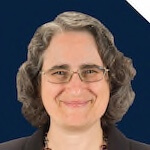
Born in Chile, University of Notre Dame sociologist Samuel Valenzuela has an abiding interest in where he grew up, leading him to focus much of his research on questions related to Chilean history and society.
How he answers, though, often depends on the experiences of other countries.
To really understand a single case,Valenzuela says,one must know others.
His recent study on the effects of welfare institutionsparticularly old-age pensionson national development is a prime example of the comparative research approach for which he is known.
Valenzuela chose to compare Sweden to Chile for the purposes of this study, describing them asan optimal fit.While they had strikingly similar societies, economies, per capita incomes and political systems at the beginning of the 20th century, they implemented decidedly different welfare programs at that time.
In Sweden, access was universal. In Chile, it was limited.
Valenzuela found that Chile exhibited much higher economic growth over the ensuing 100 years or so, a result consistent with the widely held belief that the provision of welfare is a drag on an economy. But he notes that the countrys population grew significantly faster, as well, with Chilean women having an average of five to six children into the 1960s; in Sweden, the average was about two starting in the30s.
This begs a simple question: Why were so many fewer babies being born in Sweden?
The answer has nothing to do with religion, with knowledge of traditional methods of birth control or with the number of births out of wedlock,Valenzuela says.It has to do with old-age pensions and access to child health facilities.
Pointing out that universal access to pensions in Sweden promised state assistance to even the poorest people in old age, he says parents could be confident they wouldnt one day be financially dependent on their kids. Poor parents in Chile, on the other hand, were very likely to need the support of at least one of their children later in life, a reality that encouraged them to have larger families.
By the end of the 20th century, per capita income in Sweden far exceeded that in Chile, and a smaller population wasnt the only reason why.
As the state provides old-age pensions, family resources, even among the poor, can be devoted to caring for children rather than grandparents,Valenzuela says.Hence, all children begin to go to school and stay in school longer. Despite being smaller, the new generations entering the labor force are therefore better qualified, more productive and earn higher incomes.
Based on this research, Valenzuela sees government aid as anything but a deterrent to economic advancement.
The introduction of welfare measures generates a chain of actions and reactions that percolate up from families to create the highest levels of national development in our time,he says.
Valenzuela published his findings inEl Eslabón Perdido: Familia, Modernización y Bienestar en Chile(The Lost Link: Family, Modernization, and Wellbeing in Chile), a book he co-edited with sociologist Eugenio Tironi and Rev. Timothy Scully, C.S.C., professor of political science at Notre Dame. His study prompted a Chilean presidential commission on pension reform to recommend the adoption of a fully universal retirement program. Its proposal recently was enacted into law.
TopicID: 27068
]]>