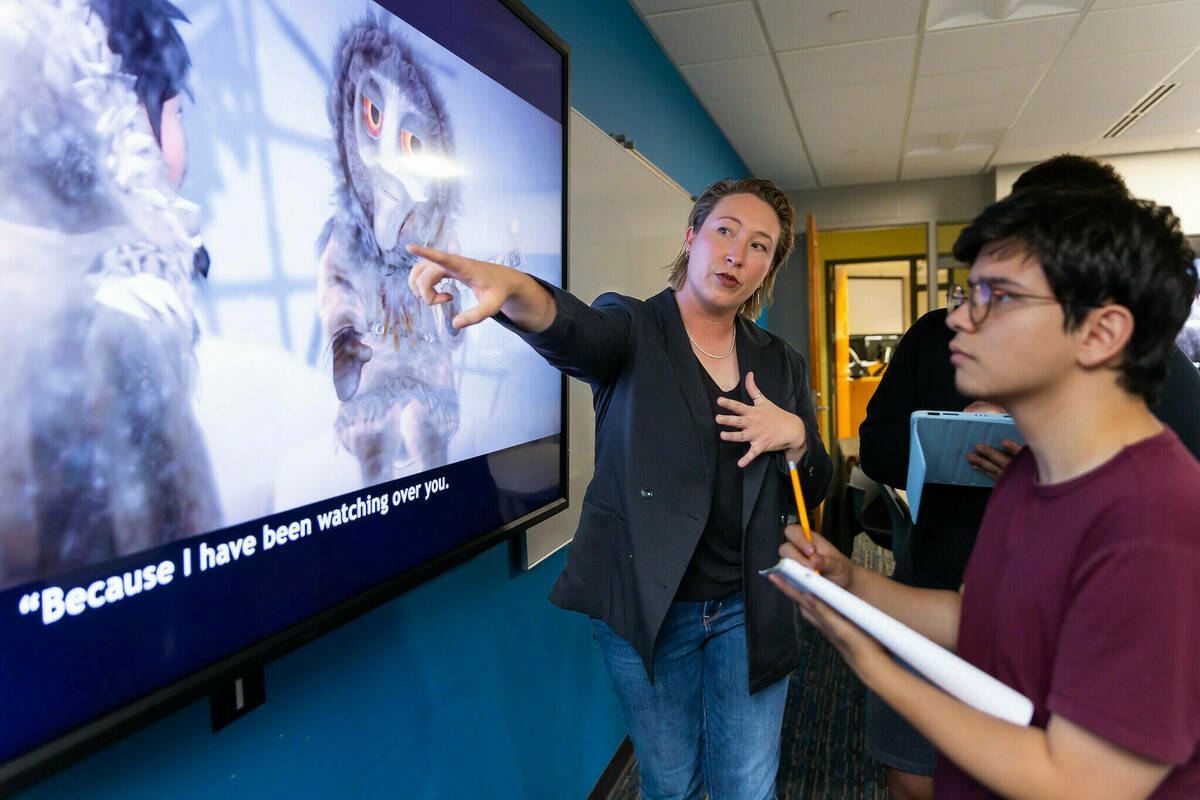
For decades, video game players have sat in front of TV and computer screens and used controllers and keyboards to kill Indigenous characters, regardless of their objective or importance to the story.
While horrifying, it’s not surprising to , an assistant professor of at the University of Notre Dame. Indigenous characters have historically been represented throughout popular culture as a bloodthirsty enemy of the cowboy.
“Gaming has taught people that Natives in digital spaces are the bad guys, and that you should engage with them in that way, even if the game is telling you not to,” said Bird, who is Western Abenaki, an Indigenous people from the northeast region of what is now the United States and Canada.
Designers of the action-adventure game “Red Dead Redemption 2” even used mechanical safeguards to try to protect Indigenous characters integral to the storyline. But sometimes safeguards aren’t enough.
“People find work-arounds,” she said. “People will spend time to find ways to kill them.”
“They’re powerful. We need to care about what games are teaching us and what we’re putting into them.”
Fascinated by video games since her youth, Bird now rigorously researches them, teaches courses on them and creates games of her own. She thinks critically about who is or isn’t depicted in them, what they allow users to do and the impact they have on generations of players.
Because video games reflect and shape culture, Bird said, they are essential to study.
“They’re powerful,” she said. “We need to care about what games are teaching us and what we’re putting into them.”
‘A hostile place for women’
Each week, about 212 million people in the United States — 62 percent of all adults and 76 percent of youth — play video games. Seventy-one percent of players are white and 53 percent are male, according to a 2023 national .
That’s a lot of people exposed to racism and misogyny in video games, said Bird, whose dissertation at the University of California, Davis was titled “.”
One example of extreme digital racism and misogyny was “Custer’s Revenge,” a 1982 Atari game that was eventually discontinued. Players earned points based on how quickly they maneuvered Gen. Custer, a white male avatar, past flying arrows to rape an Indigenous woman avatar tied to a pole.
While representation in video games has improved, backlash to inclusivity has been fierce. Misogynists threatened women in the industry with death and rape during the Gamergate online harassment campaign in 2014-15.
“Women, as well as queer people and people of color, are able to find themselves more in games, but the community spaces around them aren’t any safer or any better,” Bird said. “Gaming can still be a really hostile place for women.”
Potential for good
“It was really meaningful to me. It was a world that felt safe, comfortable, and made me happy at that time in my life.”
As a young girl playing video games with her older cousins in Vermont, Bird was already noticing the importance of representation on screen. In the game “Turok,” the Indigenous character Tal’Set was a stereotype, but he resonated with players.
“I was still fascinated by him as a kid, and I think a lot of young kids were — Native or not,” she said. “He was cool; he was a time-traveling Native who fought robot dinosaurs.”
Bird was in high school when she realized the significance and power of video games. That’s when she became engrossed with “Mass Effect,” a science-fiction role-playing action game.

“I couldn’t believe the world that had been created — all of these backstories and histories. I was still in the closet at that point, and it was the first time I had seen queer representation in a game,” she said. “It was really meaningful to me. It was a world that felt safe, comfortable, and made me happy at that time in my life.”
Today, Bird uses Native American studies and gaming theory to analyze video games while she plays them. Through “close gaming,” which is analogous to close reading, she studies the ways that designers intend for players to engage with games.
“It’s an intensive, nontraditional way of playing,” she said. “For me, a lot of it is trying to break the game. What won’t it let me do, and why? Or, why is it making me do this thing, or what happens if I do nothing?”
Video games have extraordinary potential for good, Bird said. In addition to containing incredible works of art — including drawings, music and writing — they can be educational.
“All of the parts of your brain that are necessary for learning and retention are firing when you’re playing a video game,” she said. “They're good for pattern recognition and spatial awareness, and even beyond that — social skills, sympathy and morality, and questions of ethics and decision-making.”
Small changes, big difference
In her course Decolonizing Gaming, Bird asks students to consider how video games teach players to behave within digital worlds and to examine colonial narratives around violence, race, gender, sexuality and relationship to the land.
Many video games, Bird said, are colonial in their structure and script. Players are able to collect seemingly infinite resources, and “winners” are often conquerors who gain control over land or money. And games that include Indigenous avatars often portray them as a “vanishing race” or “a people trapped in time.”
“Seeing yourself, someone like you, someone you can identify with or someone you want to be like is so powerful and important in terms of identity formation.”
Bird has designed two games, “” and “,” that upend traditional colonial approaches. In her virtual worlds, there’s nothing to collect and no one to fight.
“One Small Step,” which is set in space, encourages players “to remember that one small step can leave one giant footprint,” and punishes them for behaving in ways that are inherently colonial.
And “Full of Birds” is an interactive Indigenous art gallery that invites exploration of sacred spaces through the work of , a member of the Northern Chumash Tribe.
She’s now working on a book manuscript about why “Red Dead Redemption” is influential to her as a scholar, player and queer Indigenous woman and how it fits into the history of the American West and portrayals of Indigenous peoples.
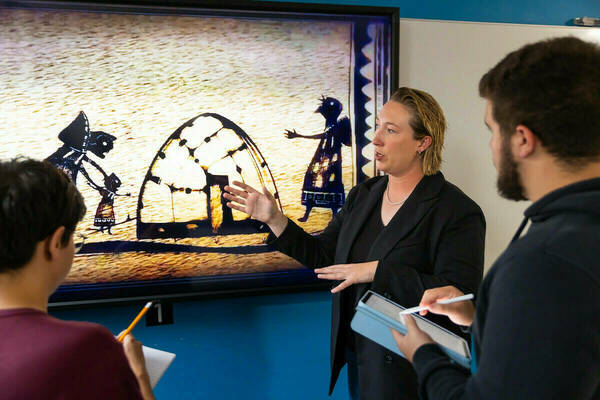
Bird likes playing “Red Dead Redemption” . She and a friend meet in the action-adventure game not to seek revenge, get into a gunfight or hunt, but to ride horses, catch up and go on fun missions.
Bird also ROM hacked (altered elements of) “Super Mario Bros.” to show how small changes in the game can make big differences in representation. Her included swapping out the Mario character for Wabanaki culture hero Gluskabe, and replacing English with Abenaki, which is her heritage language.
Recently, a major video game company hired Bird as a consultant. While a nondisclosure agreement precludes her from sharing details, she’s excited about how discussions with company representatives could positively impact Indigenous representation in gaming.
Better representation in gaming, she said, makes for better futures in reality.
“Seeing yourself, someone like you, someone you can identify with or someone you want to be like is so powerful and important in terms of identity formation,” Bird said.
“Native people need to be able to see themselves in those spaces and feel like they matter and feel like they have a sense of power and possibility and futurity.”
Originally published by at on Nov. 24.