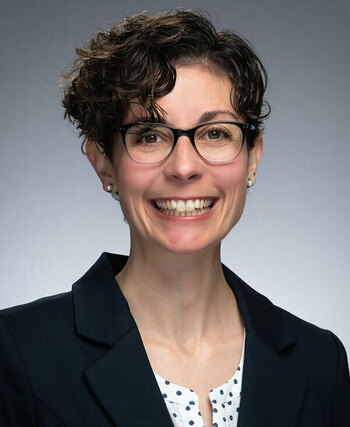
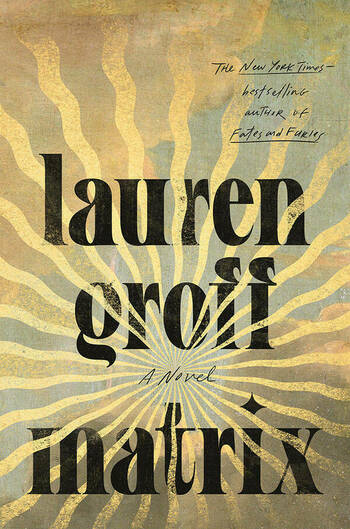
Lauren Groff’s bestselling historical novel “Matrix” captures a medieval world that University of Notre Dame assistant professor has always imagined.
“It’s an extraordinary gift,” said Bugyis, a historian of Christian theology and liturgical practice who reconstructs the lived experiences of religious women in the Middle Ages. “She saw what has been in my mind and that I always hoped other people might see.”
Bugyis’ research on routines and rituals of medieval nuns might not seem like an obvious storyline for a , but it immediately garnered Groff’s attention.
It started two years ago, when Bugyis about Benedictine nuns in the Central Middle Ages as part of her fellowship at Harvard University’s Radcliffe Institute for Advanced Study. Groff, also a fellow, was attending the lecture.
Groff’s two previous books — 2016’s “Fates and Furies” and 2018’s “Florida,” which were also National Book Award finalists — were modern stories set in America. But Bugyis’ descriptions of Benedictine nuns inspired Groff to envision an English abbey in the 12th and 13th centuries; it would be an ideal setting for a space nearly exclusively populated by women where they had agency and could thrive.
“My brain exploded into rainbows,” Groff said last year, describing her moment of inspiration. It was there, , that she thought “Oh my God, this is the next book.”
Inspiration and consultation
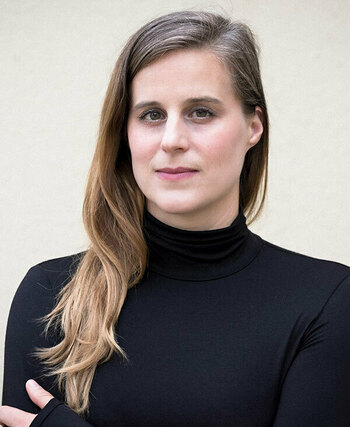
Groff met with Bugyis after the lecture, took notes at a seminar Bugyis held the next day for Radcliffe fellows, and invited her to dinner to ask more questions. Bugyis served as Groff’s historical consultant, offering a wealth of information about the topic and era and later reviewing a draft of the novel and providing feedback.
The end result is a 272-page tale of a historical figure, but one about whom little is known — 17-year-old orphan Marie de France, exiled by Eleanor of Aquitaine in 1158 to be a prioress at a frigid English abbey riddled with disease and hunger. On the novel’s acknowledgements page, Groff thanked Bugyis for her immense contributions to the work.
When Groff asked Bugyis what she’d like in return for her consultations, all Bugyis asked was for her to come to Notre Dame to give a public talk and work with students.
Groff is slated to do just that.
A day after the 72nd National Book Awards ceremony, she will deliver the at 5:30 p.m. Nov. 18 (Thursday) in .ÌýÌý
In addition to the public lecture and book reading, Groff will also spend significant time with Notre Dame students. She’ll give a workshop in the and offer a seminar for 15 Program of Liberal 91ÊÓƵ students on her novel and two of Marie de France's lais, “Laüstic” and “Chevrefoil.”
“It is my great hope that these events will allow students to talk with Lauren about her educational experiences at the undergraduate and graduate levels that formed her as a writer, her fascination with Marie de France and other great medieval women writers, her desire to create a fictional space in which women could exercise considerable agency and power together and largely separate from men, and so much more,” Bugyis said.
“Lauren possesses an extraordinarily capacious and generous intellect, and I know that she will encourage the talents and dreams of our students in countless ways.”
Groff said she’s utterly delighted to visit Notre Dame and that it will be the highlight of her autumn.
“I look forward to encountering all of the bright and thoughtful students in creative writing, medieval studies and the Program of Liberal 91ÊÓƵ,” Groff said in an email, “and to speaking once more with your own Dr. Katie Bugyis, whose brilliance and love for medieval nuns was the spark that made my love of Marie de France catch on fire and become a novel.”
‘An academic’s dream’
As a historian of medieval religious women, Bugyis’ work challenges prevailing narratives that nuns relied exclusively on priests for their sacramental care. She examines the rituals they created and orchestrated, how they heard confessions and pronounced absolution, and the levels of literacy they attained as readers, copyists, and composers of prayers and plays.
Her 2019 book, “,” won the , which honors outstanding scholarship in the history of Christianity by a first-time author.
In the book, Bugyis reconstructs Benedictine nuns’ roles on the basis of the books they both produced and used. Bugyis’ talk at the Radcliffe Institute, for example, opened with the recent discovery of the remains of a nun who lived in the 11th or 12th century. Traces of precious blue pigment were discovered in the , which likely indicates that this nun placed paintbrushes in her mouth to wet the bristles when she was illuminating manuscripts for her community.
Details like this helped set the scene for “Matrix,” in which Marie de France defies patriarchal structures and seeks to transform the abbey and chart a bold course for the women whom she loves, leads and protects.ÌýÌý
Groff explores ways that people could be human during that period, Bugyis said, including not following rules to the letter of the law.
“She doesn’t shy away from depicting a community that’s not perfect,” she said, “and that’s part of what it means to be human.”
Then and now, Bugyis said, society expects women to be agreeable and compliant, and she appreciates that Groff’s female characters may not be “likable.”
Bugyis said Groff’s gracious curiosity and ability to ask insightful questions made her feel truly seen as a scholar.
“It was an academic’s dream to have someone that interested,” said Bugyis, who also is a concurrent assistant professor of , affiliated faculty with the , and a faculty fellow in the and . “I’m a huge fan of her novels.”
So, too, is Barack Obama. The 44th president of the United States picked Groff’s “Fates and Furies” — a two-perspective portrait of a 24-year marriage — as his favorite book of 2015.
Reviewers also are lauding “Matrix.” USA Today described the novel as a “relentless exhibition of Groff’s freakish talent.” The Guardian said it “is a highly distinctive novel of great vigour and boldness … about leadership, ambition and enterprise, and about the communal life of individuals.”
The title of the novel, “Matrix,” which comes from the Latin “mater,” or mother, represents the foundational structure that gives rise to everything that was, is and will be, said Bugyis.
And that includes imagining a better future.
“Daring to imagine things differently feels liberating,” she said. “Lauren gives us permission to keep imagining.”
Originally published by at on ±·´DZ¹.Ìý9.