The University of Notre Dame’s is expanding its work to Africa’s Great Lakes region, seeking to contribute to the peace process between the Democratic Republic of Congo (DRC) and Rwanda by providing expertise on peacemaking and peacebuilding that will support the work of local stakeholders.
The move extends the global footprint of the Peace Accords Matrix, part of the at Notre Dame’s . The Peace Accords Matrix provides decision-makers and frontline practitioners with evidence to support the implementation of peace agreements. Its ongoing work includes monitoring implementation of agreements in Colombia and the Philippines.
“We know that agreements succeed or fail during the challenging implementation phase, when political leaders and peace practitioners must juggle competing demands,” said , professor of the practice and director of the Peace Accords Matrix. “Strengthening this peace process will be key for the entire Great Lakes region to move beyond cycles of humanitarian crises, protect human rights and support African-led diplomacy.”
Supporting the regional peace process

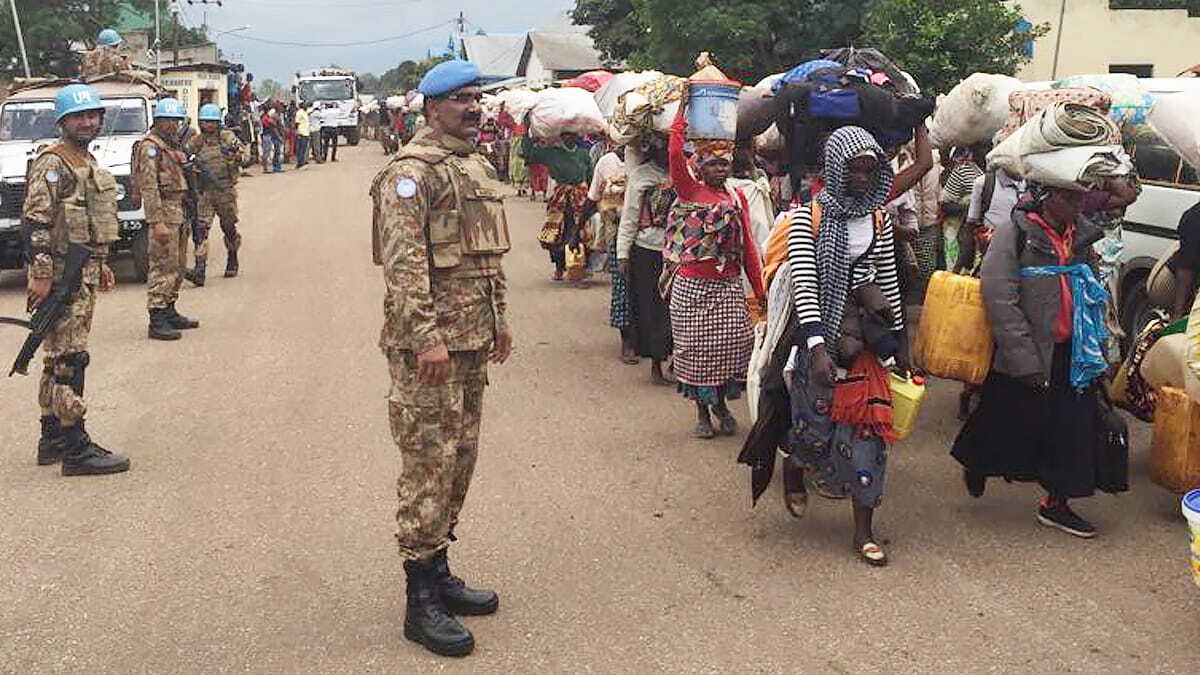
Decades of conflict and instability in eastern DRC have displaced more than 7 million people, according to the. Renewed violence since 2022 has heightened tensions across the Great Lakes region, a highly populated area in East Africa centered around a chain of lakes that includes Lake Victoria.
The DRC and Rwanda signed a U.S.-brokered peace agreement in June 2025, and in December the two countries formally established the . But implementation has proven difficult amid disputes over the sequencing and verification of commitments, and fighting has continued in eastern DRC.
So far, civil society groups have been chronically underengaged in the implementation process, said , assistant director of research and grant operations for the Peace Accords Matrix. That risks creating a top-down process that lacks broader societal input and, ultimately, sustainability.
Amid those challenges, the Peace Accords Matrix is identifying civil society organizations to consult as it builds a stakeholder map of the peace and conflict landscape in the Great Lakes region.
“Our work is really about understanding the context as much as we can, mapping the landscape and building trust with key actors so that we can serve as a helpful resource for those at the negotiating table and those in civil society who want to participate more fully,” Serrano said.
The Peace Accords Matrix has engaged , a Ghana-based peacebuilder with decades of experience, to help coordinate this work.
Bombande, who co-founded the , has served as a senior mediation adviser to the United Nations, including with the U.N. mission in the Central African Republic, and previously worked with the Keough 91ÊÓƵ’s Kroc Institute as a fellow. Along with , a research associate with the Peace Accords Matrix, he is identifying key groups for the Peace Accords Matrix to consult with and planning workshops that will begin in fall 2026.
The resulting stakeholder map, grounded in social network analysis, will expand civil society groups’ understanding of their role in the peace process and identify opportunities to participate in it, addressing a key gap in the fragile implementation process, Serrano said.
“In every context in which we work, we prioritize relationships with local stakeholders,” Serrano said. “They play a critical role in shaping and sharing our analysis.”
Extending a proven model
The latest initiative expands the larger work of the Peace Accords Matrix, which maintains the largest collection of implementation data on intrastate peace agreements and is now active on three continents.
In Colombia, the Peace Accords Matrix is responsible for verification and monitoring of the implementation of the 2016 peace agreement — the first time a university-based research center has directly supported implementation of a peace accord, and the first time researchers have measured one in real time. In the Philippines, it works with Catholic Relief Services-Philippines to track progress on the 2014 Mindanao agreement.
In Africa’s Great Lakes region, the role of the Peace Accords Matrix will continue to evolve as the team builds relationships, Serrano said, adding that the opportunity to work on a new continent reflects the versatility of the Peace Accords Matrix and its capacity to adapt to the needs of local partners.
“It’s not about arriving with answers,” Serrano said. “It’s about listening to the local context so that we can be of service in a way that’s meaningful and supports a sustainable peace.”
The work in the Great Lakes region is supported by a grant from the , an independent, Swiss-registered foundation that invests in organizations that strengthen the resilience of the most overlooked communities.
Learn more and contact
To learn more about the Peace Accords Matrix, please visit To contact the program, please email peaceaccords@nd.edu.
Originally published by at on Aug. 25.
Contact: Tracy DeStazio, associate director of media relations, 574-631-9958 or tdestazi@nd.edu