

In recent years, development and aid advocates have increasingly called for shifting more resources to support local leadership. Capacity strengthening is central to that shift: helping partners to improve financial systems, deepen management skills and elevate planning.
But what actually sticks after the funding ends? What is working, and what could be working better?
That’s the question a new project led by University of Notre Dame scholar-practitioner seeks to answer. Perrin is partnering with Catholic Relief Services to evaluate the effectiveness of a capacity-strengthening program that supports local partners in Africa, Asia, Latin America, Europe and the Middle East.
The project builds on Perrin’s larger work to provide evidence that can inform the effectiveness of development and humanitarian efforts, work he said is particularly timely given recent disruptions in global aid.
“This work affirms the agency and dignity of partners on the ground who are closest to the problems their communities face,” said Perrin, associate professor of the practice in Notre Dame’s and a core-affiliated faculty member of the school’s. “In a time of uncertainty about the future of global aid, these findings will inform interventions that support local partners and amplify their impact.”
Supporting local leadership
Perrin is leading a team that will evaluate the effectiveness of projects completed through the . Since 2022, the initiative has invested more than $10 million to support local partners in 18 countries.
The fund has worked with Catholic humanitarian and development agencies, diocesan social service organizations, inter-religious and secular nongovernmental organizations and a provincial health department.
It has focused on strengthening capacities prioritized by these local institutions, addressing areas including human and financial resource management, resource mobilization and monitoring and evaluation. The initiative is part of Catholic Relief Services’ larger approach to .
Throughout the next year, Perrin’s team will connect with Catholic Relief Services’ ALLRight Fund partners in eight countries roughly two years after their projects have ended: Bangladesh, Cambodia, Cameroon, El Salvador, Greece, Lesotho, Mali and Niger.
The waiting period is deliberate, Perrin said: Many changes look good on the day a project closes, but the real test is whether they persist once outside help has ceased.
The team will ask four key questions about capacity-building efforts:
- Did it last? Are new systems, policies and skills still part of how the organization works, even after staff turnover?
- Did it make a difference? Are partners running programs better, raising funds more successfully or gaining influence in their communities?
- Did it help through hard times? Did the changes help partners adapt to the major cuts in global aid since 2025?
- Did it change how people see themselves? Do staff now see themselves as capable leaders and experts, in keeping with Catholic Relief Services’ commitment to human dignity?
Researchers will synthesize findings and recommendations in a report. The team includes several contributors from the Pulte Institute: a predoctoral research associate; , associate director of research; , associate director of programs and evidence engagement; and , a senior research scientist. They consulted with more than 160 staffers at Catholic Relief Services and partner organizations while developing the questions and evaluation approach.
Sarah Cashore, the ALLRight Fund chief of party at Catholic Relief Services, said the work will provide strategic guidance for her organization.
“Local organizations will always be in the best position to set the agenda and respond to meet the needs of their communities,” Cashore said. “We want to support their ability to do that by ensuring our capacity-strengthening work embraces what works for them. We believe this collaboration will yield valuable insights, both for Catholic Relief Services and the wider community of organizations committed to locally-led development and humanitarian response.”
Ensuring development interventions affirm human dignity
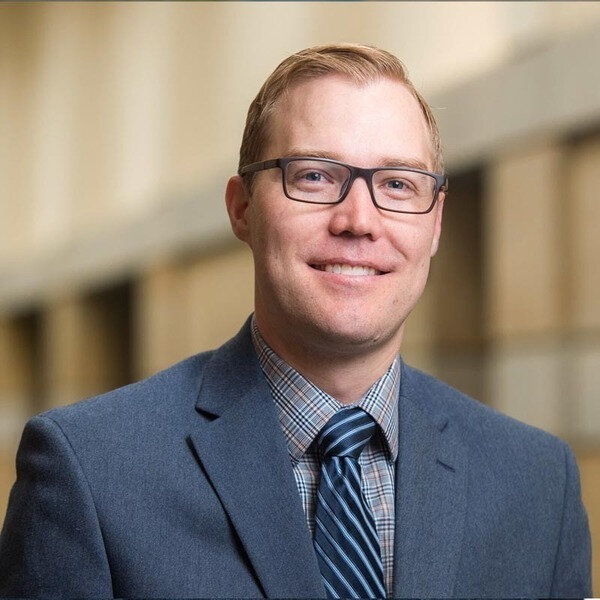
Cashore said Catholic Relief Services wanted to partner with Perrin given his understanding of the organization’s partnership approach and principles, which includes an emphasis on — affirming the dignity of each person and the whole person.
Perrin’s 2025 study in examined how development organizations unwittingly violate the dignity of the people they aim to serve. It outlined 13 “benevolent indignities” including infantilization (treating individuals as passive or incapable rather than acknowledging their agency) as well as distancing and disregard (token listening that doesn’t meaningfully incorporate feedback).
The study built on Perrin’s ongoing dignity-related research. He led a team that developed a database mapping more than 40 dignity-related concepts to validated measurement tools. Working with Catholic Relief Services, the team also developed and validated a survey tool for gauging whether aid is .
On Dec. 9, Perrin will participate in a at the that will synthesize insights from that line of work.
The conversation will unpack why human dignity belongs at the center of debates about the future of foreign assistance, and what it takes to put that principle into practice. The event is hosted by the Keough 91ÊÓƵ and Catholic Relief Services.
Originally published by at on November 17, 2026.